
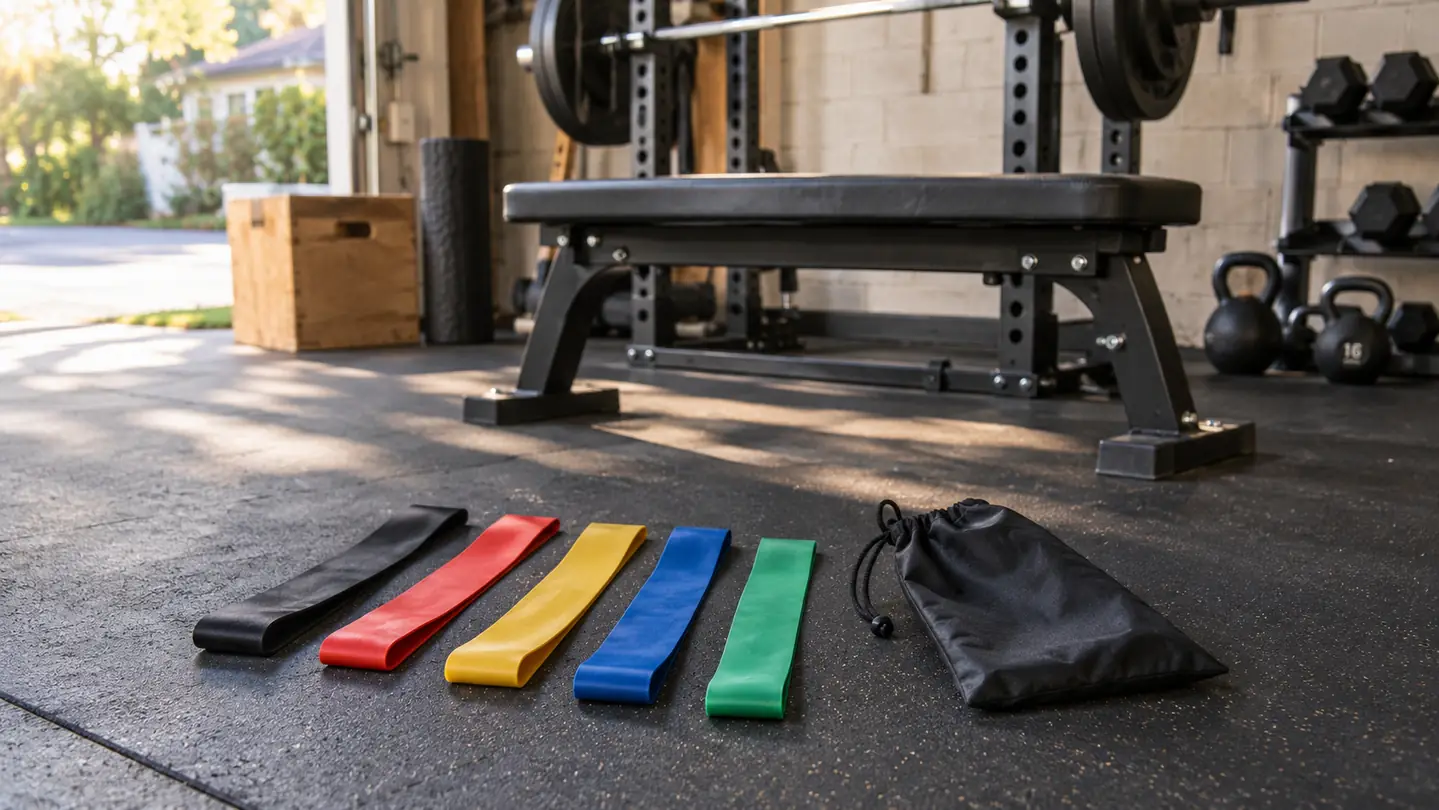
The question usually comes from a parent in the bleachers around the third inning, after they have watched me haul a gym bag out of the truck. Are those bands doing anything real, or is a pair of dumbbells still the only thing that counts? Fair question. I have owned the same set of 35-pound dumbbells for about ten years and a set of five Fit Simplify loop bands for about two. Both live in the same two-car garage outside Fort Worth. Both get used most weeks. Neither has replaced the other.
Here is the short answer. The Fit Simplify bands are the better tool for warming up, for hips and shoulders, for anything that has to travel, and for joints that do not want a load that stays constant from the first inch of a rep to the last. The dumbbells are the better tool for putting real weight on a lift, for measuring progress in numbers you can write down, and for anything that needs to feel heavy. If you already own a pair of dumbbells, the bands are the addition, not the replacement. If you own neither and you are 46 with hips that lock up during softball warmups, the bands are the easier place to start.
| Fit Simplify Loop Bands | Dumbbells (35 lb pair) | |
|---|---|---|
| Portability | Five loops and a carry bag ride in a gym bag or behind a truck seat | One fixed pair, roughly 35 pounds, stays in the garage |
| Space it takes up | 12 inches by 3 inches, folds into a bag, hangs on a hook | Needs floor space plus a rack or a clear corner |
| Resistance through the rep | Tension builds as the band stretches, hardest at the top | Same load at the bottom, middle and top |
| Warmup speed | Four minutes for a hip and shoulder series before a game | Needs the rack or bench for most of what it does |
| Built-in instruction | Illustrated booklet with dozens of exercises in the bag | You either know the movement or you do not |
| Load ceiling | Five graded latex loops, all bodyweight-level tension | 35 pounds per hand, fixed |
| Measurable progression | You move up a band when it gets easy, with no numbers attached | Five-pound jumps you can log in a notebook |
| Heavy compound work | Not built for loaded squats or presses | Built for exactly that |
| Longevity | Latex wears with heat and sunlight, so the set is a consumable | Ten years old and still the same 35 pounds |
| Best for | Warmups, hips, shoulders, travel, joint-friendly loading | Getting stronger and keeping score |
Where Fit Simplify Loop Bands Win
The carry bag is the whole argument for some guys, and it holds up. Five latex loops, each 12 inches long by 3 inches wide and a quarter inch thick, 3.5 ounces for the set, in a bag that drops into the side pocket of a gym bag. Mine has been riding behind the seat of the truck for two years. It goes to the field for my son Tanner's travel team practices, it goes in the bag on Tuesday nights, and it has come out in a hotel room in Waco more than once. A pair of 35s does none of that, and I am not hauling a rack to a softball doubleheader.
The second thing bands do that dumbbells cannot is change the resistance through the range of motion. A dumbbell gives you the same 35 pounds at the bottom of a press, in the middle, and at the top. A loop band gives you almost nothing when it is slack and everything when it is stretched, so the hardest part of the rep lands at the top, where the muscle is already short and the joint is not folded up underneath a load. For shoulders that click and hips that feel stuck, that curve is gentler exactly where I need gentle.
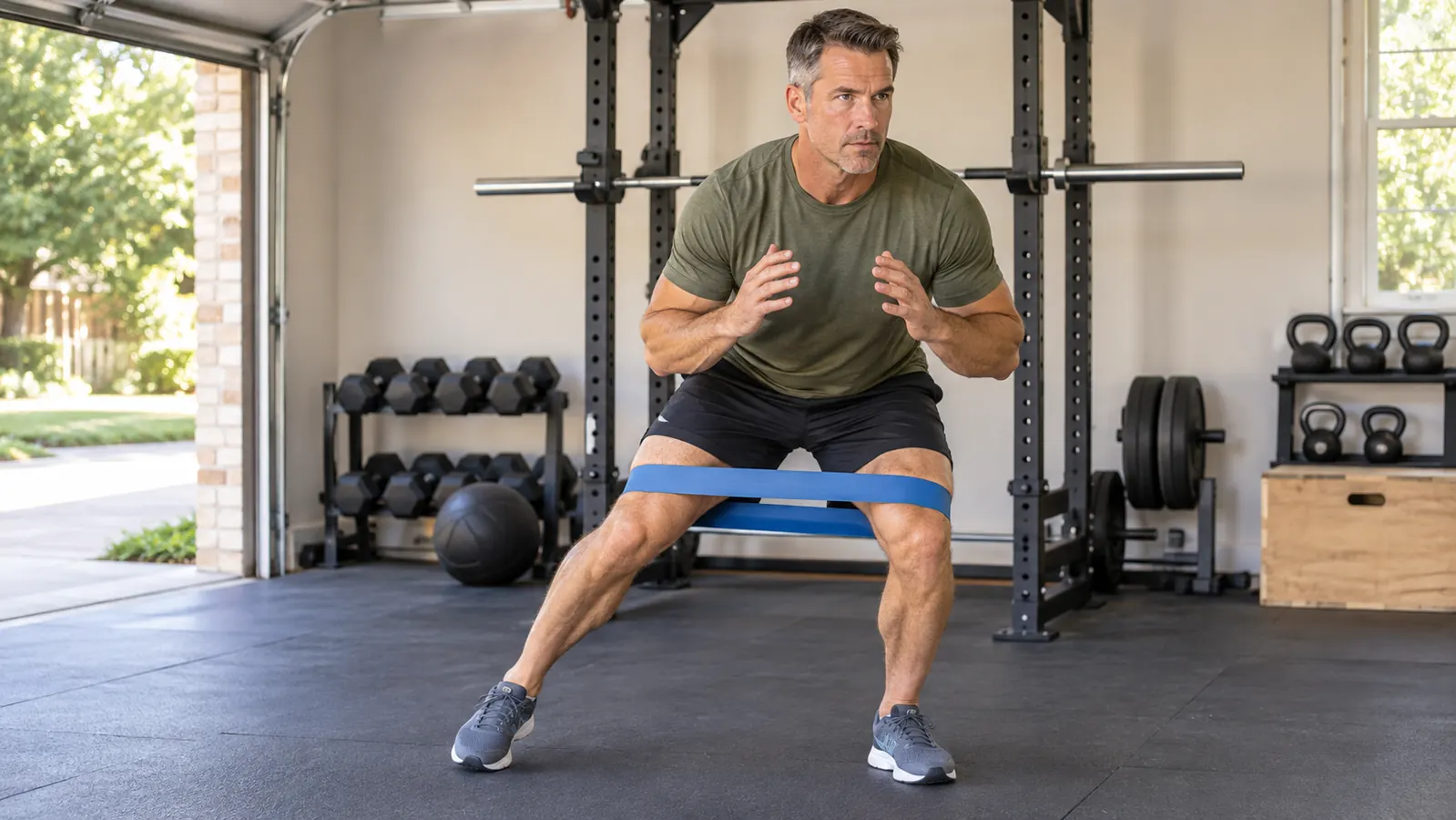
The first month with the Fit Simplify set I used them wrong. I grabbed the heaviest loop in the bag because that is what you do with weights, and I put it around my thighs for lateral walks. It bit into my legs, my feet turned out, and my hips felt worse the next morning, not better. A physical therapist friend watched me do it in the field house parking lot and told me to drop to the light band and slow down. That was the fix. The light band, ten steps each way, knees soft, feet pointing forward. It felt like nothing for the first week. By the third week my hips stopped locking up in the first inning of softball, which is the specific thing I bought them for. With bands, the heaviest one is not the one you graduate to, it is the one you reach for when the movement is already clean.
Five levels do more work than I expected. The extra light and light bands are the ones I use on shoulders before basketball, when the job is blood flow and not a training effect. The middle and heavier bands go around the thighs for lateral walks and around the ankles for the hip series I run before softball. I have had the set for two years and not one band has torn.
I keep the booklet in the bag, and I still pull it out. There is an exercise in it for shoulder external rotation that I use before basketball, and one for hip abduction that I use before softball. I do not need dozens. I need four or five I can run in a hallway without thinking. The rest of the booklet is there for the nights when the usual routine gets stale, which happens around week six of any program I have ever followed. For a set that costs less than a tank of gas, having a written list of options in the bag is a bigger deal than it sounds.
Where Dumbbells Win
Getting stronger in a way you can measure belongs to the dumbbells. My pair is 35 pounds and it has been 35 pounds for a decade, which is the entire point. I can write down three sets of eight and know next month whether I did three sets of nine. With a band, moving up means grabbing the next loop, and nobody can tell me how much more resistance that is. It is more. That is the whole report.
Heavy work is not a fair fight either. A band cannot load a squat or a bench press in any way that resembles a bar or a pair of dumbbells, and pretending otherwise is how a guy my age ends up on the wrong side of a heating pad. I press the 35s, I row them, I carry them across the garage. When my knees are cranky I box squat with them. That is a job the bands do not get to have.
One Saturday morning I tried to make the bands do a dumbbell job. I anchored a heavy loop under the leg of the bench and pressed it overhead, thinking I could get some resistance without dragging the 35s out. It was a mess. The band pulled me forward, the path was wrong, and my shoulders felt it in a bad way for two days. That is not a knock on the bands. It is a knock on me for asking a warmup tool to be a barbell. The dumbbells do that job because gravity is simple. You pick them up, you put them down, and the load does not change based on how far you are from the anchor.
Wednesday mornings I keep a notebook on the bench. Not a fancy app, a spiral notebook with dates and sets. Last month I wrote press 3x8, row 3x10, carry 3 trips for four weeks running and then added a rep on the press. That is the entire progression system. It is boring. It works. If I tried to track that with bands, I would be writing medium band, felt harder, which tells me nothing in March when I am trying to figure out whether I am actually getting stronger or just sleeping better.
Then there is the boring one. Dumbbells do not degrade. Mine are ten years old, the knurling is worn smooth in two spots, and they weigh the same as the day I bought them. Latex is not that. Heat, sunlight, and a garage in a Texas summer all work against a band. Five bands in a bag is a set you will replace eventually, and adding five pounds to a dumbbell means buying another pair, which is why I still own exactly one.
Two Years, Five Bands, Zero Tears: Check Today's Price on the Set That Lives in My Truck
Five latex loops from extra light to heavy, a quarter inch thick and 12 inches by 3 inches, with a carry bag and an illustrated exercise booklet in the box. Mine has ridden in a gym bag for two years without a single band giving out.
Amazon Check Today's Price on Amazon →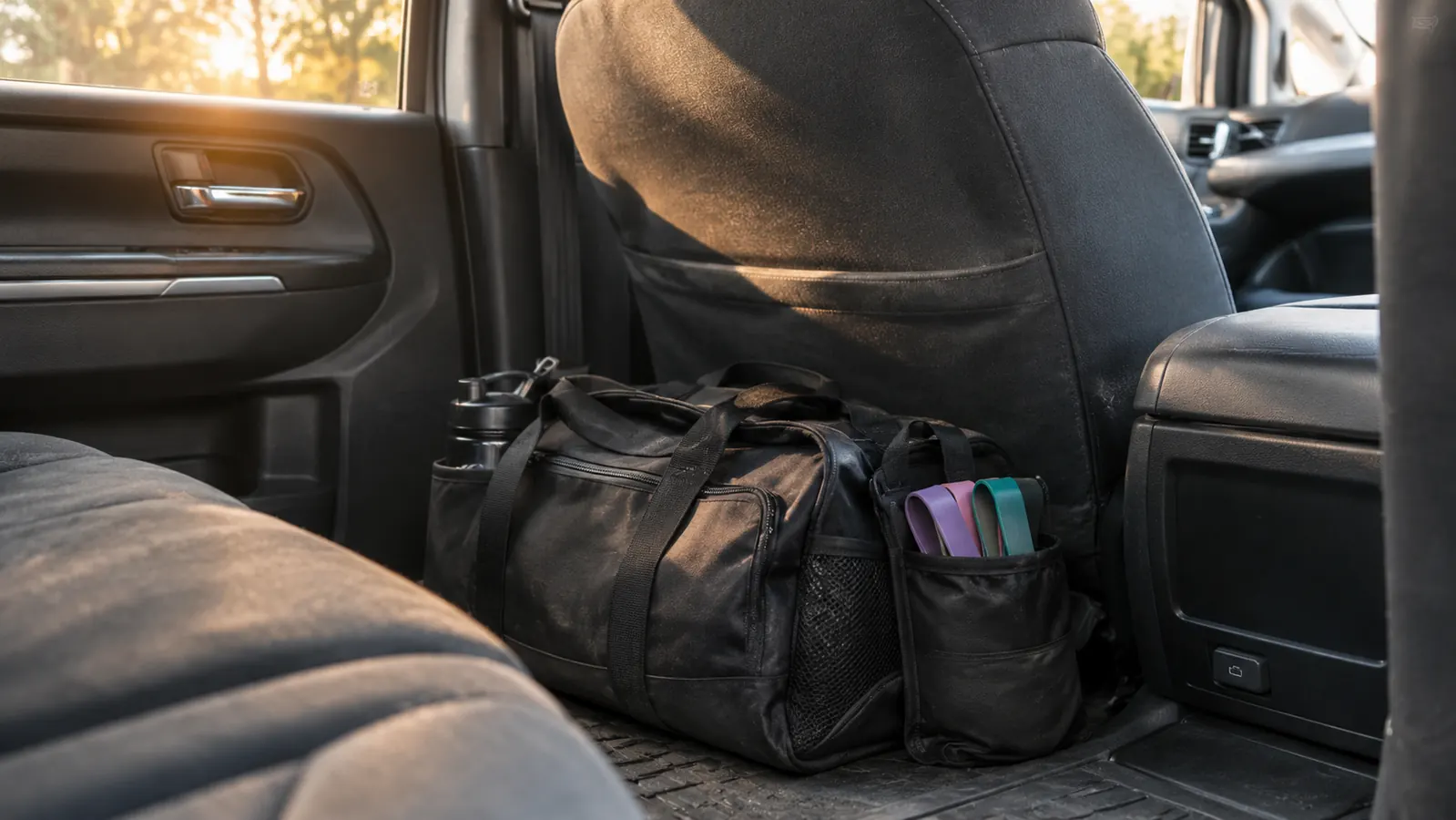
How I Run Both in the Same Week
Tuesday night basketball is where the bands earn their keep. I get to the gym early, find a patch of wall, and run four minutes of band work: shoulder pull-aparts with a light band, lateral walks with a heavier one around the thighs, and a hip series with a band around the ankles. That is it. Four minutes. The difference between doing it and skipping it is not subtle at 46. When I skip it, the first three trips down the floor feel like I am moving through wet sand.
Last Tuesday I got to the gym at 6:40 for a 7:00 tip. I ran the band series in the hallway behind the bleachers: pull-aparts, lateral walks, ankle series, four minutes total. Then I played. I was 46 and guarding a 28-year-old assistant coach from the other school, which is its own kind of warmup. The next morning my calves were sore but my hips were not locked. That is the difference the bands make for me. It is not a training effect you can measure on a chart. It is whether I can get out of the truck the next morning without making a noise.
Wednesday morning in the garage is dumbbell morning. Press, row, a goblet squat holding one 35, and carries across the mat. The bands sit that one out. They are not going to add anything to a working set of presses, and I am not interested in pretending they do. Two or three mornings a week is the whole strength program I have time for, and the dumbbells are what make it count.
Softball is where the two overlap. Bands before the first inning for hips and shoulders. Bands again after a doubleheader, light and slow, more for circulation than anything else. The dumbbells stay home. On doubleheader Saturdays I do the same series in the parking lot before the first game, then a lighter version between games. The bag stays in the truck bed, which is the only reason it happens. If the bands lived on a shelf in the garage, I would skip them half the time. That sounds lazy because it is. The best piece of gear is the one that is already with you. If you coach or you travel with a team, that split is the whole reason the set lives in the truck. Tanner's travel team gets the agility ladder and the disc cones. I get the bands. Everybody carries something.
Two years, five bands, one carry bag, not a single tear. Ten years, one pair of dumbbells, still 35 pounds. Both of those facts tell you exactly what each tool is for.
Who Should Buy Which
Buy the Fit Simplify bands first if your training day starts with a warmup you currently skip, if your hips and shoulders are stiff for the first ten minutes of anything, if you coach or travel, or if you want a set that fits in a bag you already carry. They are also the right call when a constant load bothers a joint and you would rather the resistance build than sit on you. What they are not is a strength program. And if you have a real injury, something torn or a joint that catches and locks, see a doctor before you buy anything at all.
Buy dumbbells first if the goal is to get stronger and you have somewhere to keep them. One pair of 35s will carry a 46-year-old man a long way if he actually uses them two mornings a week. If you already own a pair and you are reading this looking for a reason to skip the bands, there is not one. The two tools do different jobs. The guys I coach who are still healthy in their forties are the ones who warm up like they mean it and then lift something heavy. The bands handle the first part. The dumbbells handle the second.
Start With the Warmup You Will Actually Do at 6 A.M.
Five resistance levels, a carry bag and an illustrated guide, small enough to live in the gym bag you already haul around. Warm up with the bands, then go lift something heavy.
Amazon Check Today's Price on Amazon →