
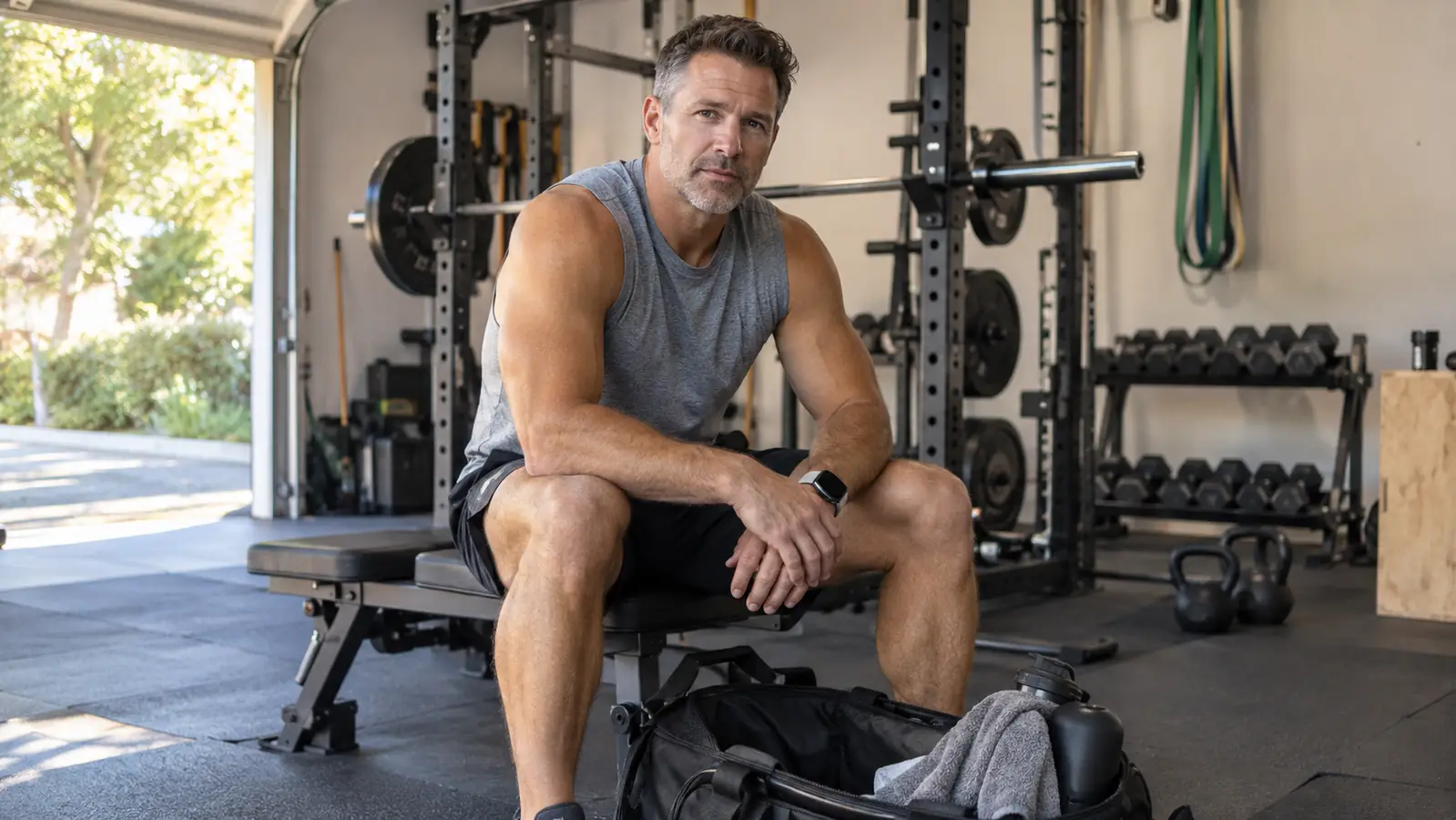
Tuesday night basketball used to cost me two days. I would play forty minutes of men's league, drive home in the truck with my right hamstring humming, and then spend Wednesday and Thursday walking around a high school campus like a man ten years older than I am. I stretched for five minutes, forgot about it, and did the exact same thing the next week. Last winter it finally annoyed me enough to do something about it. I bought the TheraGun Prime, sixth generation, about ten months ago. It is the first and only massage gun I have ever owned, so I am not going to pretend I ran it against a dozen others. What I can tell you is why it never leaves my bag.
A note before the list, because it matters. I am not a doctor, a trainer or a physical therapist. I am an assistant athletic director at a public high school outside Fort Worth who still plays pickup basketball, still plays softball in the spring and fall, and still lifts two or three mornings a week in the garage. Nothing I have ever had was torn. If something on you is actually torn, that is a doctor conversation, not a gadget conversation. What follows is about soreness and stiffness, the kind that shows up the day after a game and hangs around longer than it used to.
The gun that replaced two days of walking funny
Five speeds, two attachments, about two hours of battery, one button. It rides in my gym bag behind the seat of the truck and comes out after every game.
Amazon Check Today's Price on Amazon →Two minutes on a sore calf beats twenty minutes of guessing
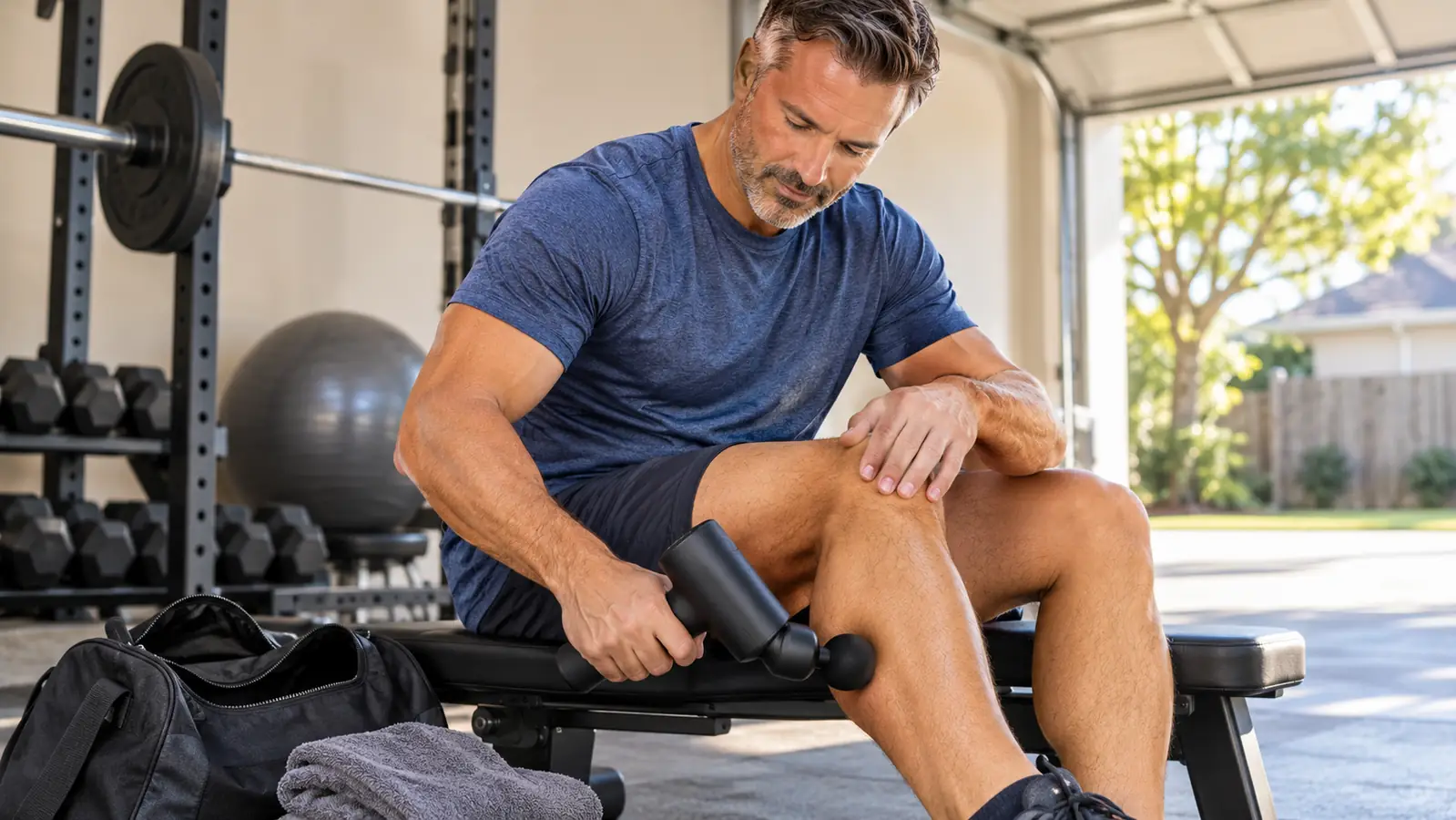
After Tuesday basketball I work calves, quads and shoulders, one to two minutes per muscle. That is it. No routine to memorize, no sequence to look up. I start on the lowest of the five speeds, let the muscle settle, and move up if it still feels locked. The reason this matters is not that percussion is magic. It is that I will actually do two minutes in a parking lot. I was never going to do twenty minutes of anything after 10 p.m.
It fits in the bag you already carry
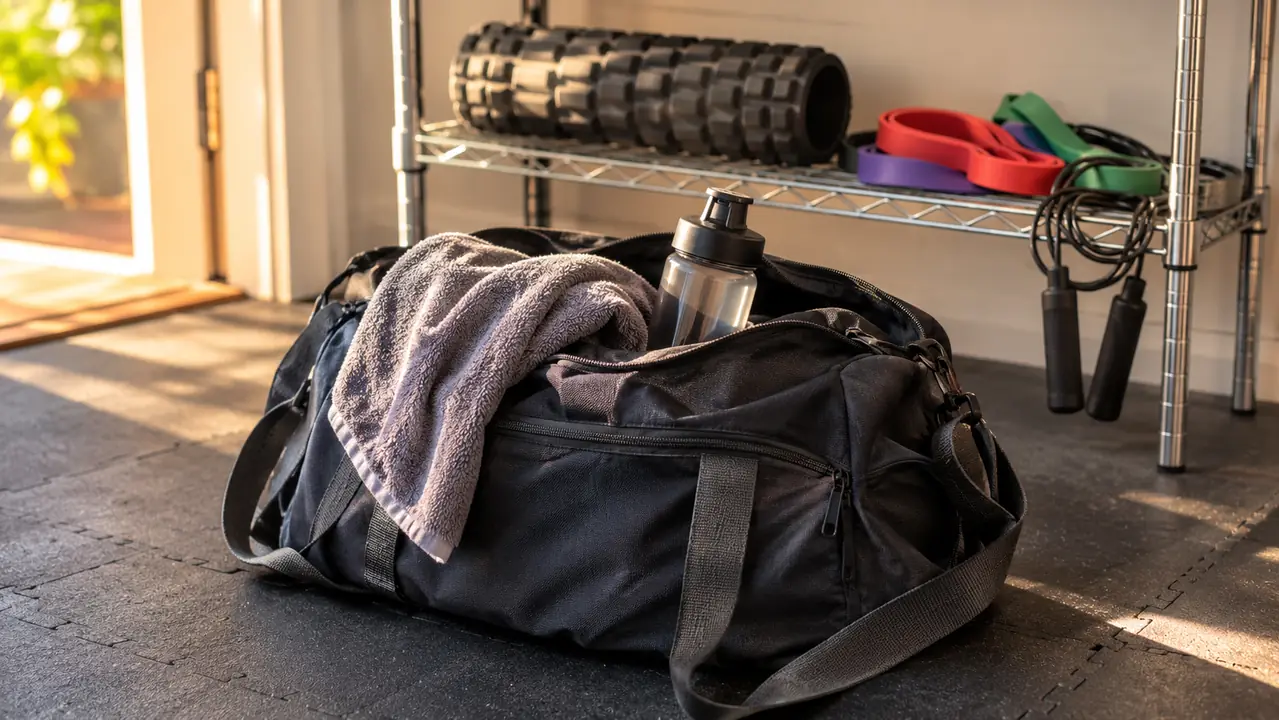
This thing is 3.6 pounds and about 10.89 inches long, 9.07 wide and 3.05 deep. That is small enough to drop into the duffel I already take to the gym, which is the whole reason it gets used. Recovery gear that lives in a closet gets used twice. Recovery gear that lives in the bag you grab on the way out the door gets used on a Tuesday in February when you are tired and it is cold. Mine sits behind the seat of the truck between games.
One button means you will use it instead of skipping it
One-button operation and LED indicators tell you what speed you are on and how much pressure you are applying. There is nothing to pair, nothing to sync, nothing to charge separately. I have watched guys buy recovery tools with four settings and a phone setup and then leave them in the box. The best recovery tool is the one with the lowest activation cost. Mine has one. That is the entire feature list I need at 10:15 at night in a parking lot.
Five speeds cover warmup through postgame
Five speeds sounds like a marketing number until you use them. I run the low end on my shoulders before I lift, because my shoulders are stiff from years of catching and a cold morning in the garage. I run the higher end on quads after a game when the muscle is warm and I want more. Same tool, two completely different jobs. A single-speed gun would have been fine, but I would have been using the wrong setting half the time and not knowing it.
The motor holds its speed when you lean into a knot
The adaptive motor keeps consistent speed and power under pressure, which is the spec-sheet way of saying it does not bog down when you push on it. That matters on a quad. If you have ever used a cheap percussion tool, you know the sound it makes when it stalls against a tight muscle and just rattles instead of working. This one does not. I lean in on the outside of my right quad and it keeps hammering at the same rate until I let off.
Two attachments is the right number for a gym bag
It ships with two massage attachments, and for what I do, that is enough. I am not running a recovery clinic out of my truck. One attachment handles the broad stuff on quads and calves, the other gets into the tighter spots around the shoulder. Two is also the number that fits in the side pocket of a duffel without turning into a bag of loose parts I have to sort through every time. More pieces would mean more to lose.
Two hours of battery outlasts a doubleheader Saturday
Up to two hours of battery, and about an hour to charge. I have never run it dead. A Saturday in the spring means a softball doubleheader, and if I use it between games and again at home that night, I am still fine. Compare that to the number of times I have picked up a cordless tool in my garage and found it dead, and you understand why this one lives in the bag with a charged battery instead of on a shelf.
It does the job I used to borrow a massage stick for
I never owned a massage stick. I used a teammate's in the dugout a few times and thought it was fine, mostly because it was free and it was there. The problem with a stick is that you are doing all the work with your arms, and by the seventh inning your arms are tired too. The TheraGun does the work. That is the whole difference. I am not saying a stick is useless. I am saying I stopped asking to borrow one.
The grip holds up when your hands are already tired
The patented ergonomic grip sounds like catalog language until you are holding the thing for two minutes on a cold parking lot at 10 p.m. after forty minutes of basketball. My hands are tired at that point. The grip lets me hold it from a couple of different angles without my wrist complaining, so I can reach the back of my calf without contorting my arm. Small thing. It is the difference between finishing the calf and quitting early.
It turns recovery into something you actually finish
Here is the honest one. The reason this earns its spot is not a spec. It is that it takes two minutes and gives me an obvious stopping point, so I do it. Before this, my recovery plan was a vague intention to stretch more, which is the same as having no plan. Ten months in, I am not walking funny on Wednesdays anymore, and that is the only data point I actually care about. The longer version of that story is simple: it goes in the bag after every game and it comes out the next morning.
What I'd Skip
Two things I would not spend money on alongside this. The first is compression sleeves. I never owned a pair, I tried a friend's once on a road trip, and I got nothing out of it that a warm shower did not also give me. The second is any promise that this replaces actual care. If your knee is swelling or your hamstring grabbed and did not let go, a massage gun is not the answer and no amount of five speeds changes that. Go see somebody who knows what they are looking at. The other thing I would tell you is that this does not replace my foam roller. The GRID still comes out most mornings for hamstrings and upper back, because rolling covers more surface at once. The gun is for spot work on a specific muscle, not for the whole leg. If you are deciding between them, I wrote a whole piece comparing the TheraGun to foam rolling, and my answer is that a serious lifter in his forties ends up owning both.
Two minutes per muscle, four Tuesdays a month, and I stopped losing my Wednesdays. That is the entire case for the thing.
Stop losing the day after the game
3.6 pounds, 3.05 inches deep, about two hours of battery. It drops into a duffel and comes out in a parking lot. That is the whole pitch, and it is the reason mine has not left the bag in ten months.
Amazon Check Today's Price on Amazon →