
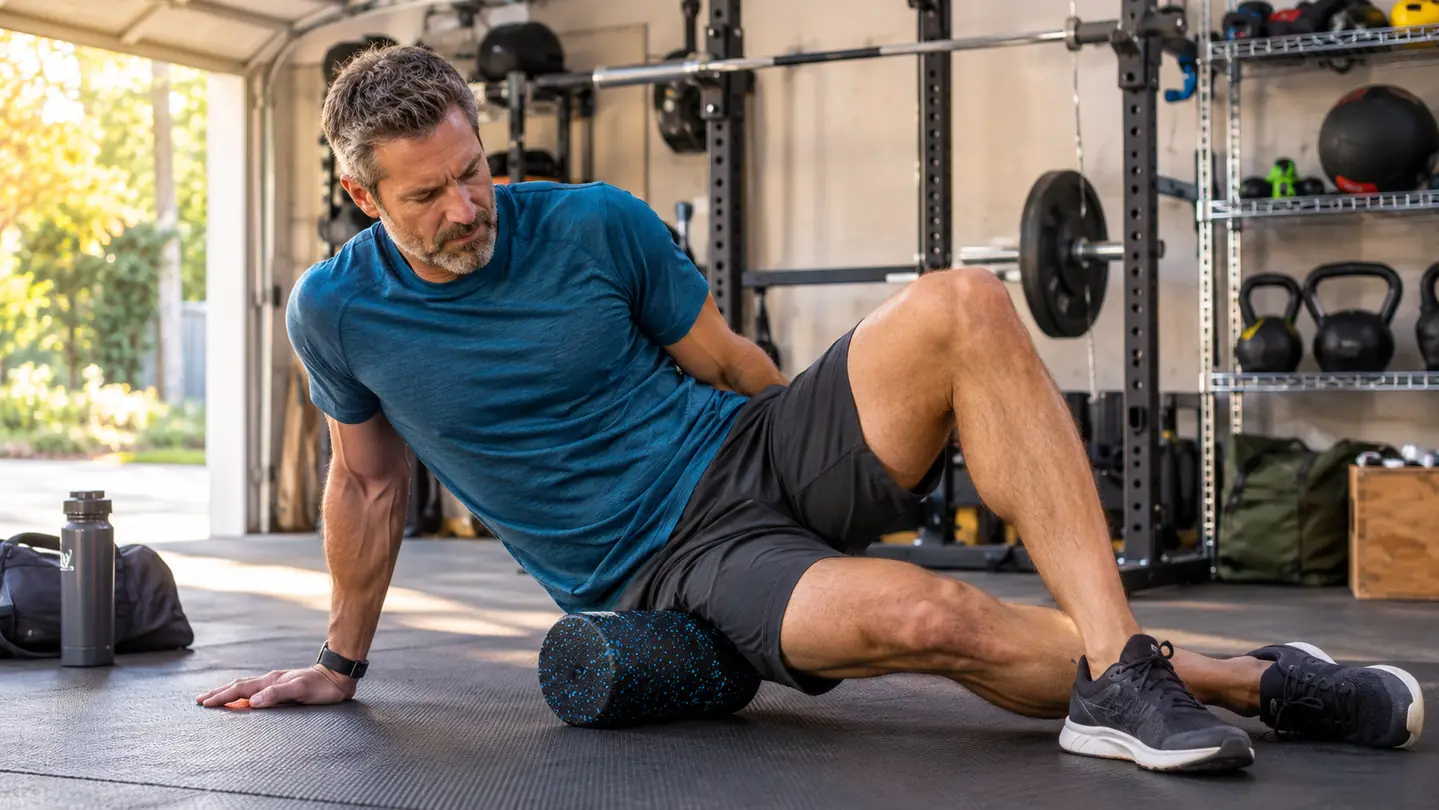
Last winter I came home from Tuesday night basketball, sat on the tailgate of my truck for a minute, and did not want to stand up. I am 46, six feet, about 205 pounds, and my knees and hips have been stiff since my college catching days. Nothing was torn. I want to be clear about that. I was just sore for two or three days after every run, and my right hamstring kept tightening up on me. The TRIGGERPOINT GRID foam roller is the piece of recovery gear I reach for most mornings on the garage mat. I have owned this 13-inch original for about three years.
I am not a physical therapist, a trainer, or a doctor. I am Grady Holcomb, an assistant athletic director at a public high school outside Fort Worth, and I still play men's league basketball on Tuesday nights, pickup some Saturday mornings, and softball in the spring and fall. I lift in my garage two or three mornings a week. That is the lens here. If you have a real injury, see a doctor. This is about a tool that helped me manage the normal stiffness of a 46-year-old who has not stopped moving. It is not a treatment plan.
The Quick Verdict
A firm, simple 13-inch roller that has held its shape through three years of near-daily garage use. It is not comfortable, and that is the point.
Amazon Check Today's Price →The first thing I reach for on the garage mat
The 13-inch TRIGGERPOINT GRID is extra firm, simple, and has held its shape through three years of near-daily use. If you want a soft roller, keep looking. If you want real pressure before you move, start here.
Amazon See the GRID roller on Amazon →How I've Used It
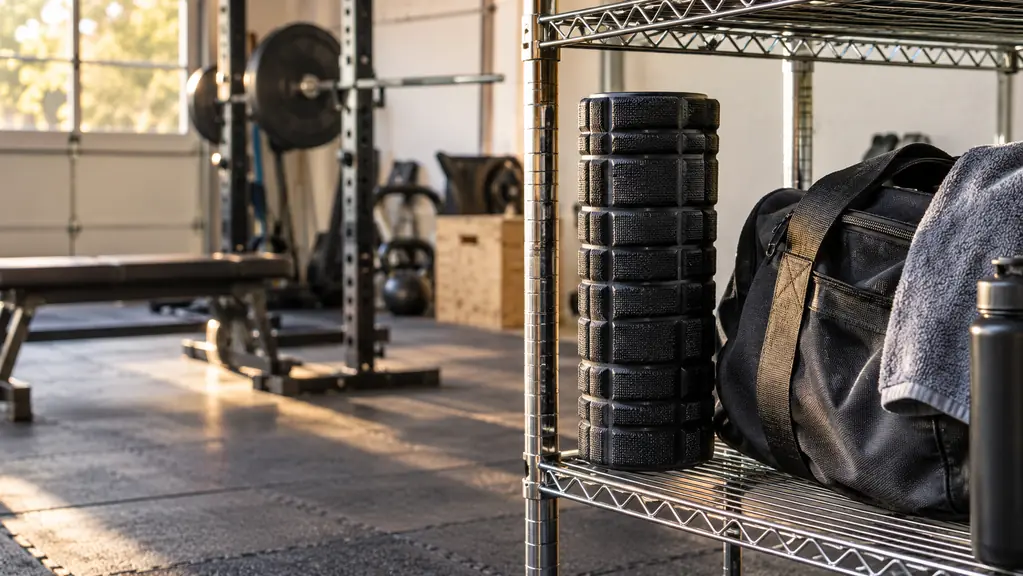
I bought this roller about three years ago after a physical therapist friend watched me hobble through a warmup and told me to get on the floor. It was my first foam roller. I had used a teammate's massage stick in the dugout years before, but I never owned one of those either. The GRID lived on the rubber mat in my garage at first because I did not know where else to put it. Now it sits on the wire shelf by the door to the house, next to my gym bag. That shelf is the first thing I see when I walk out to lift.
My routine is not fancy. Most mornings I spend five to ten minutes on the floor before I lift or head to work. I start with my hamstrings, especially the right one, then the area around my IT band, then my upper back. I go slow, maybe an inch per second, and I breathe. The first month was humbling. I thought I was in decent shape until I put my full weight on a firm roller and realized how much I had been ignoring. I also learned that more pressure is not always better.
I use it before I move, not after. After Tuesday basketball I am usually too tired to roll, and that is when the Theragun Prime comes out for one to two minutes per muscle on my calves, quads, and shoulders. The roller is for the morning after and the morning before. That split has worked for me. The GRID is the least technical piece of recovery gear I own, and it is the one I would replace first if it disappeared. It takes no setup, no charging, and no thinking.
What the 13-Inch GRID Actually Is
The specs are simple. The TRIGGERPOINT GRID is 13 inches long and 5.5 inches in diameter. It weighs about 1.4 pounds. The listing calls the firmness extra firm, and that is accurate. It has a multi-density exterior over a rigid, hollow core, a 500-pound weight limit, and a one-year limited manufacturer warranty. It is foam, it is one piece, and there is nothing to charge. There is no app, no display, and no motor.
The 13-inch length is the detail I notice most. It is short enough to sit on the wire shelf and slide into my gym bag behind the seat of my truck. It is also short enough that I cannot lie lengthwise on it and roll my whole spine at once. For hamstrings, calves, and upper back, it is fine. For someone who wants a long roller for the whole body, a longer roller might make more sense. I have not owned one, so I will not pretend to compare.
The extra-firm surface is the other detail. This is not a soft roller that lets you sink in. The multi-density exterior gives a little, but the hollow core keeps it from collapsing. That is what I wanted. I do not need a roller to be comfortable. I need it to put pressure where I am tight and let me get on with my morning. If you are new to rolling, that firmness can be a shock. Start with short passes and let your body weight do the work.
The material is foam, and the listing says it will not break down or lose shape from repeated use. I can only speak to my own roller. After three years of most mornings on a rubber mat, the surface still feels firm and the ends have not crumbled. It has picked up some dust from the garage floor, which is expected. I have not had to replace it. That is more than I can say for some cheap gear I have bought over the years.
The Hamstring Test and What Changed
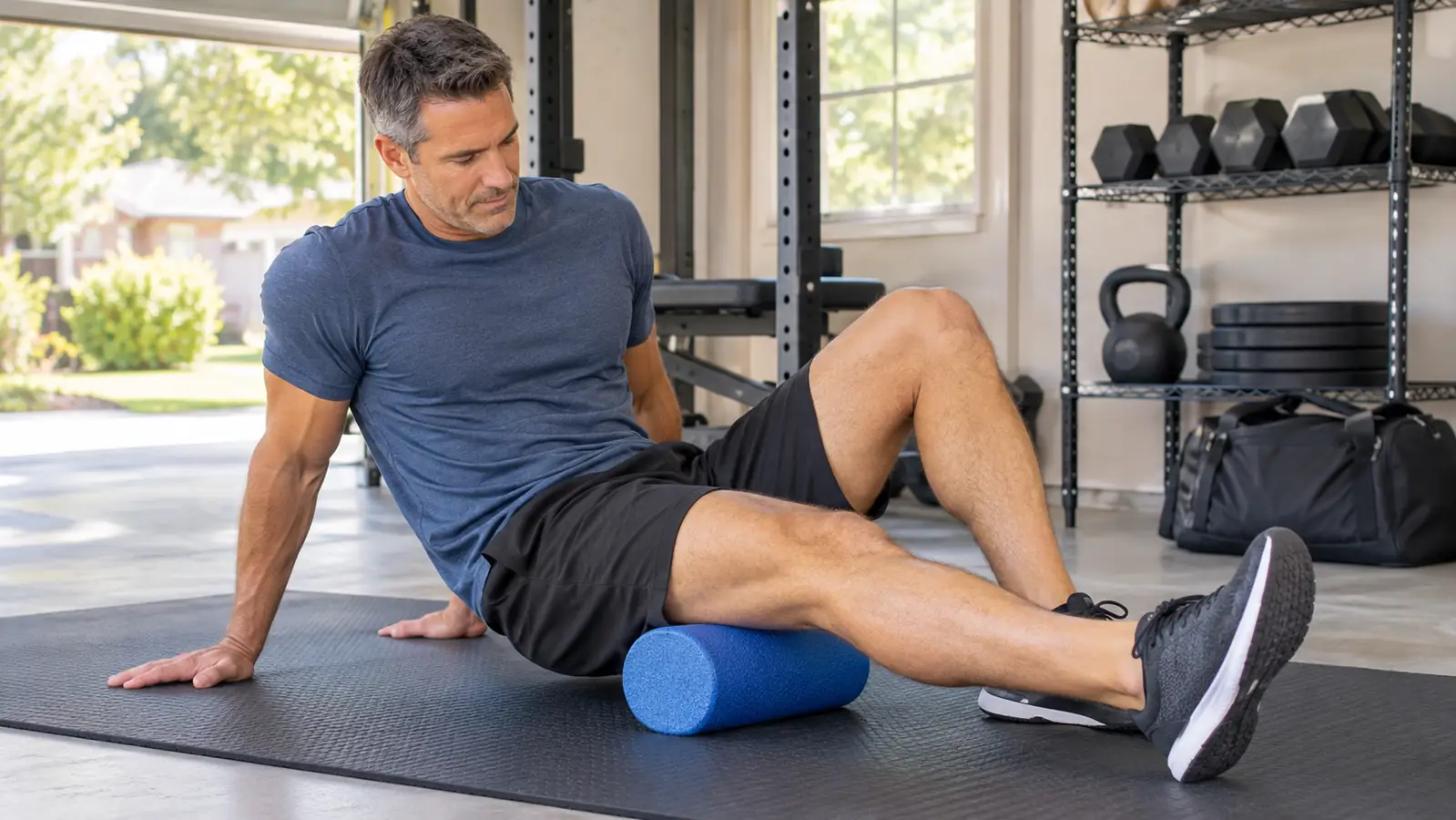
My right hamstring has been the problem child since my catching days. It tightens up when I sit too long, and it complains the day after I sprint. I put the roller under my right hamstring and take slow passes from just above the back of my knee to the lower glute. I do not roll directly on the knee joint. I keep my hands on the floor for support and let my body weight do the work. I stop before anything feels sharp.
The IT band area is trickier. I do not force it. I lie on my side and use short passes along the outside of my thigh, stopping before anything feels sharp. The first few weeks I pressed too hard and made that area angry. That was my fault, not the roller's. Now I keep the pressure moderate and spend more time on my glutes and upper back. The roller is a tool, not a test of toughness.
The upper back is where this roller earns its keep for me. I lie on it crosswise, support my head with my hands, and move slowly from my shoulder blades to the middle of my back. I do not roll my lower back. I have heard enough people say to be careful there, and I am not a professional. The result is not dramatic. It is just easier to stand up straight in the morning.
Last winter I was sore for two or three days after every Tuesday basketball game. Now I am usually sore for one bad morning and a stiff afternoon. That is not a cure. It is a small, real improvement that I noticed over a couple of months. My knees still ache when the weather turns. My hips still need warmup. The roller did not fix my old catching damage, and I would not trust anyone who said it would. It made the morning after less of a negotiation.
Where It Falls Short
The extra-firm surface is the main drawback. On bony spots, like the outside of my hip or the area around my shoulder blade, it can feel like a punishment. I have learned to put a folded towel under it for those spots, or to skip them. If you are brand new to foam rolling, this is not the roller I would hand you first. A softer roller would let you learn the movement without tensing up.
The 13-inch size is a tradeoff. It stores easily and travels well. It is not a full-body roller. If you want to lie on it lengthwise, or roll both legs at once, you will want something longer. I have not needed that. I use it for targeted work, not for a full spa session. I also would not call it a travel roller for a flight, because it still takes up space in a bag.
It also comes with access to a free online instructional video library. I watched one video early on and then stopped. If you have never rolled, the videos are useful. If you have been doing this for years, they will not tell you anything new. The one-year warranty is standard. I have not had to use it. And if you have a real injury, this roller is not a substitute for a doctor or a physical therapist.
One more thing. It is not a strength tool. It will not fix weak hips or a bad squat pattern. It will not make you flexible overnight. It is a piece of foam that puts pressure on soft tissue. That is the job. If you expect more, you will be disappointed. If you expect that, it does the job well.
How It Fits With the Rest of My Recovery Gear
I own five pieces of recovery gear, and the GRID is the simplest. The Theragun Prime has five speeds, two attachments, about two hours of battery, and one button. The Normatec 3 legs have seven compression levels and ZoneBoost, and I use them two or three evenings a week for 30 minutes on the couch. The loop bands are for hip and shoulder warmups. The agility ladder is for footwork on the driveway. The roller is the one I use most mornings because it takes five minutes and requires no setup.
A normal week looks like this. Monday morning, roll and lift. Tuesday morning, roll and maybe bands. Tuesday night, basketball. Wednesday morning, roll, then Theragun on calves and quads if I am sore. Thursday morning, lift. Saturday, pickup basketball or yard work. Sunday, Normatec while I watch football. That is not a program. It is what I can stick to. The roller is the piece that fits in the cracks.
Tanner, my 14-year-old, plays travel baseball, and he has used the roller on his calves after a doubleheader. I tell him to keep it light and not to roll anything that hurts. Dana has used it on her upper back once or twice. It is simple enough that nobody needs a manual. That matters in a house where gear tends to get buried. The GRID has not been buried. It is by the door.
I still warm up with the loop bands before every game and lift. I still do the work. Recovery is a pile of small habits: sleep, water, not sitting all day, and a warmup that actually warms you up. The GRID is one habit in that pile. It is not the whole pile.
What I Liked
- Holds its shape after three years of near-daily use
- Extra-firm surface gives real pressure without bottoming out
- 13-inch size stores on a shelf and fits in a gym bag
- No batteries, no app, nothing to charge
Where It Falls Short
- Extra firm is too much on bony spots at first
- 13-inch length is short for lying on your spine or rolling both legs at once
- It does not replace strength work or medical care
- The online video library is basic if you already know how to roll
Three years in, the surface still feels firm, the ends have not crumbled, and I still reach for the same 13-inch roller most mornings.
Who This Is For
This is for the athlete in his or her 40s who still plays and still lifts, and who wakes up stiff more often than they want to admit. If you are a runner, a basketball player, a softball player, or a lifter with tight hamstrings and an upper back that needs pressure, the 13-inch GRID is a sensible place to start. It is also for the person who wants one durable tool, not a gadget with an app. The 500-pound weight limit and the one-year warranty are not the reason I like it, but they do not hurt.
I would also say it is for someone who has been cleared to roll. I am not a doctor. If you have a real injury, see one. If your physical therapist has told you to avoid a body part, avoid it. The roller does not know better than they do.
Who Should Skip It
Skip it if you want a soft roller. Skip it if you are brand new and the idea of extra firm pressure makes you clench up. Skip it if you need a longer roller for your whole spine or both legs at once. Skip it if you are looking for vibration, heat, or a screen. This is a foam roller. That is all it is.
Skip it if you will not use it. I have seen foam rollers turn into dust collectors in gyms. The only reason this one has lasted three years is that it sits by the door and I walk past it every morning. If you need an app to remind you, this is not the tool for that. If you need a simple object that is there when you are, it is.
Three years, one roller, no batteries
If you want a firm, simple roller that has held up to daily garage use, the 13-inch TRIGGERPOINT GRID is the one I know. Start slow. Keep the pressure honest. And if it is a real injury, see a doctor.
Amazon See the GRID roller on Amazon →