
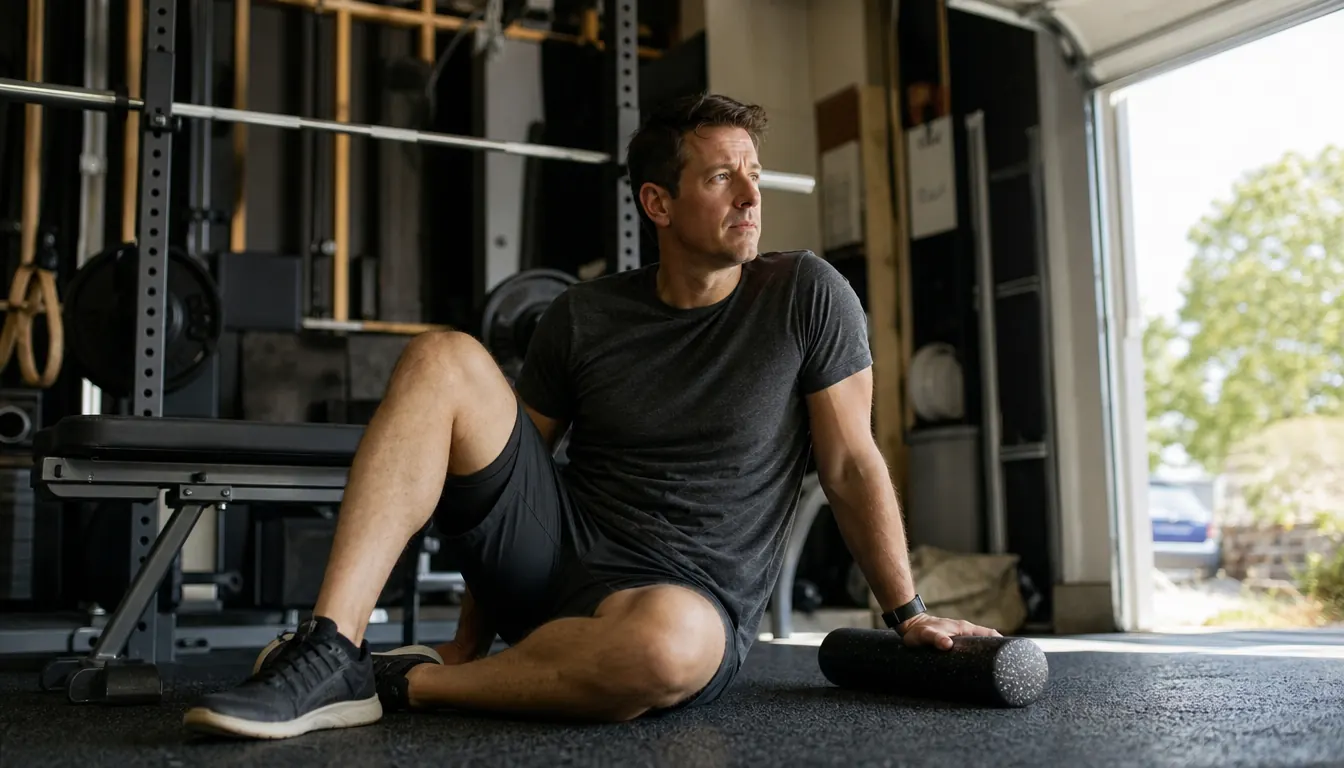
I am Grady Holcomb, 46, an assistant athletic director at a public high school outside Fort Worth, Texas. I am 6 feet, about 205 pounds, and I still play men's league basketball on Tuesday nights. That sentence used to be a flex. Now it is a warning label. Last winter, every Tuesday game turned into two or three days of sore calves, tight hips, and a right hamstring that felt like a guitar string. Nothing torn, no surgery, no dramatic injury story. Just the bill for four years of college baseball catching and a lot of Saturdays pretending I am still 25. The tool that changed the most for me was not a gadget. It was a TRIGGERPOINT GRID foam roller I bought about three years ago, my first foam roller, after a physical therapist friend showed me how to roll.
I am not a doctor or a trainer, and this is not medical advice. If something is sharp, swollen, or getting worse, see a doctor. What follows is the practical case for a foam roller from a guy who lifts in his garage two or three mornings a week, plays softball in spring and fall, and coaches his son Tanner's travel baseball team. The TRIGGERPOINT GRID is the one on my wire shelf by the door to the house. These are the 10 reasons it stays there.
The 13-inch roller I reach for before my coffee
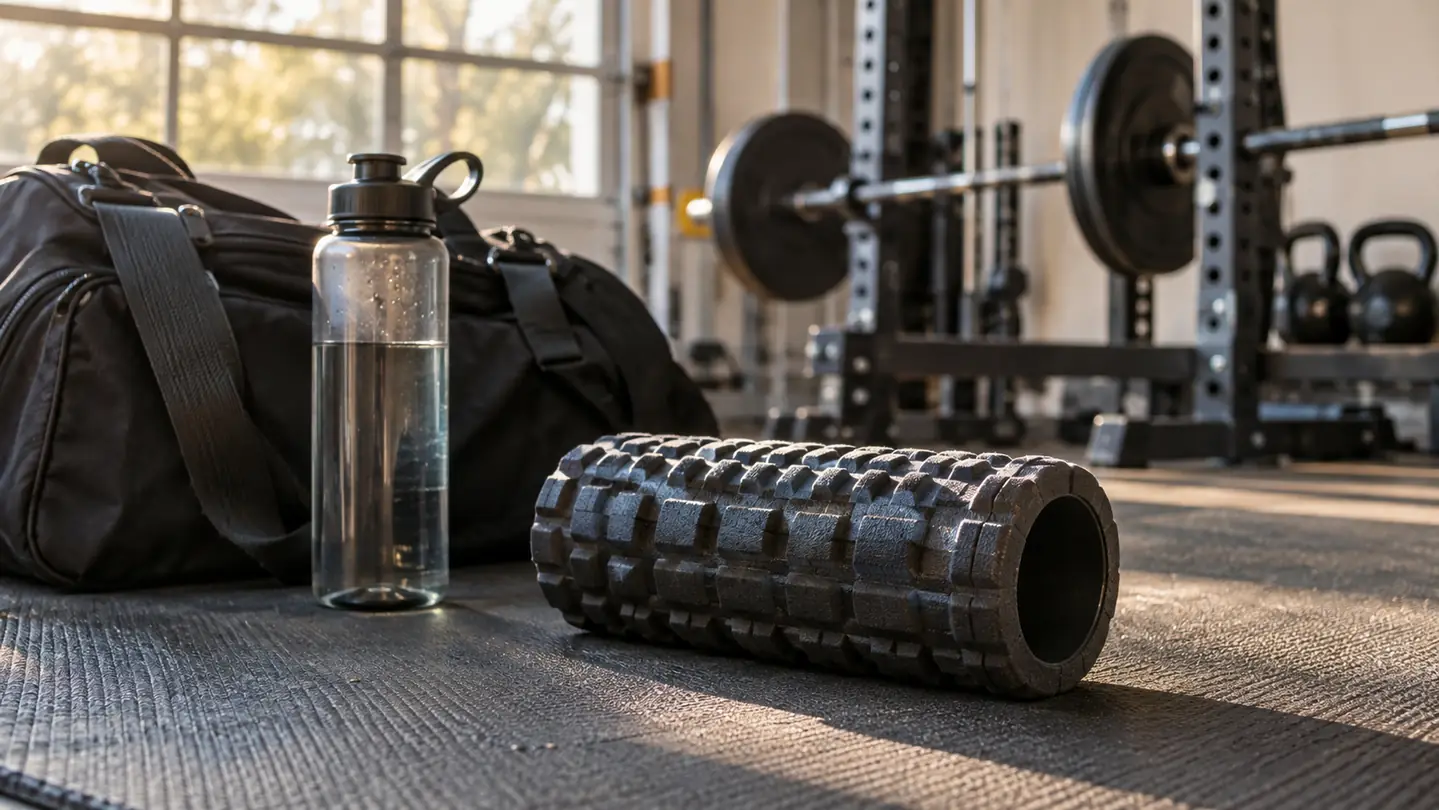
The TRIGGERPOINT GRID is extra firm, 13 by 5.5 inches, and light enough to carry from the garage mat to the truck. It is the first thing I use on my hamstrings most mornings.
Amazon View the TRIGGERPOINT GRID on Amazon →It turns a stiff morning into a normal morning
I do not wake up feeling like a catcher anymore. I wake up feeling like a 46-year-old who used to be one. My hips are stiff, my right hamstring is tight, and the first ten steps down the hall are not pretty. Three or four minutes on the GRID roller on the garage mat changes the next hour. I am not chasing a deep, dramatic breakthrough. I just want to tie my shoes without holding my breath. Most mornings, that is exactly what I get.
It gets to my right hamstring before it grabs
My right hamstring is the one that tightens up easily. After Tuesday basketball, it used to stay angry until Thursday. Now I roll it the next morning, slow and boring, and then I do a few light hip bridges. The roller does not fix the hamstring. It buys me a window to warm up and move. That window is the difference between feeling old all day and feeling like I can coach Tanner's team without wincing when I squat to pick up a bucket of balls.
It gives my upper back a reset after catching
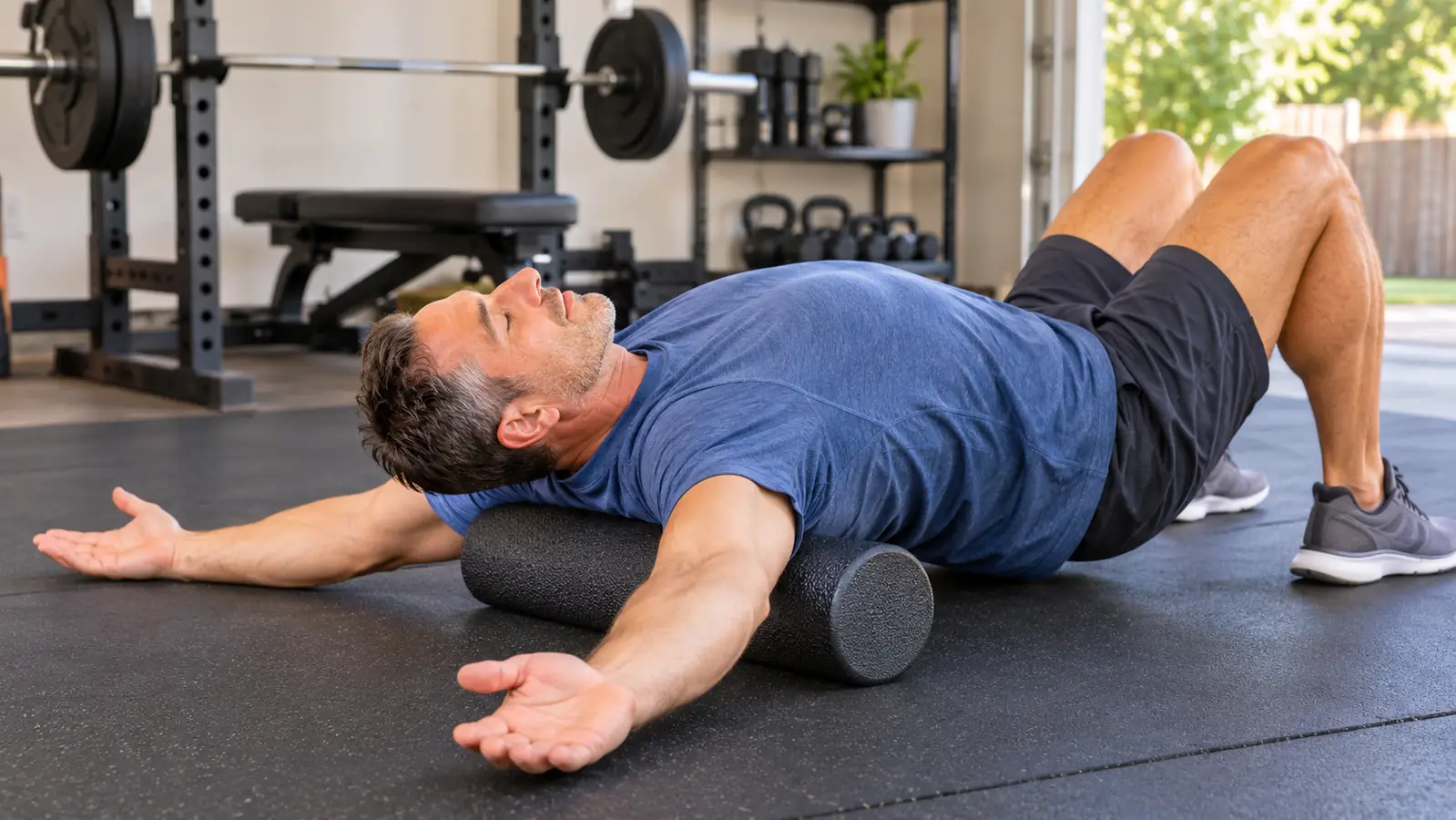
Four years of college baseball as a catcher left my upper back in a permanent shrug. Sitting in a truck, sitting at a desk, sitting on a bucket during practice, it all stacks up. I lie on the roller with it across my upper back and let my arms fall open. I do not force anything. I just breathe and let the extra firm surface do the work. Two minutes of that and my shoulders drop back where they belong. It is the simplest posture reset I have found that does not require an appointment.
It fits a garage gym without taking over
My gym is a two-car garage with a rubber floor mat, a squat rack, a bench, and one pair of 35-pound dumbbells I have owned for about ten years. I do not have room for a lot of extras. The GRID roller is 13 by 5.5 inches and about 1.4 pounds. It leans in the corner or sits on the wire shelf by the door. That size is why I actually use it. A tool that has to be unpacked and staged is a tool that stays in the bag.
The hollow core holds up to real weight
I am 205 pounds. I lean on this thing with most of that weight when I work my quads or my back. The TRIGGERPOINT GRID has a rigid hollow core and a 500 pound weight limit, and mine has not gone soft or lost its shape in three years of steady use. It also carries a 1 year limited manufacturer warranty. That matters if you are a bigger athlete or if you share the roller with a team. A flimsy roller that squashes flat is not a recovery tool. It is a pool noodle with a marketing budget.
It is firm enough that I know I am doing something
The GRID is listed as extra firm, and that is not a suggestion. My first week with it, I thought I had made a mistake. It does not sink away from you. You feel the pressure, especially on the IT band area and the quads. I started with short passes and built up. Now I prefer it. A soft roller feels nice for about ten seconds. A firm one gives me feedback, and feedback is what keeps me from rushing through the work.
The free video library keeps me from guessing
I am a high school assistant AD, not a physical therapist. When I first started, I was basically rolling around like a dog on a rug and hoping for the best. The roller includes access to a free online instructional video library from TRIGGERPOINT. I watched the basics, copied the positions, and stopped wasting time. That matters more than people admit. A good roller is not much help if you are using it on the wrong spot at the wrong angle.
It travels in the truck without drama
My gym bag rides behind the seat of my 2018 Ford F-150. The roller goes with it on game days, doubleheader Saturdays, and any morning I lift away from the garage. It is light enough to carry in one hand and tough enough that I do not worry about it getting banged around. I have not had to baby it. That sounds small until you have driven to a field with a knot in your calf and no way to work it out before the first pitch.
It pairs with my Theragun instead of replacing it
I own a Theragun Prime and I use it. It is great for calves, quads, and shoulders after a game, and it lives in my gym bag. The GRID roller does a different job. It lets me use body weight and a wider surface on my hamstrings, upper back, and IT band area. I use the roller most mornings and the gun after games. I would not want to give up either one. The roller is the base layer. The gun is the spot treatment.
It makes recovery a habit instead of a project
The biggest change is not the roller itself. It is that the roller is easy. It sits by the door. I get on the mat for five minutes while my coffee is brewing. No appointment, no setup, no driving anywhere. That is how recovery actually happens for a guy with a job, a wife named Dana, a 14-year-old who plays travel ball, and a Tuesday night basketball habit. The TRIGGERPOINT GRID made the habit cheap enough to keep. The results came from keeping it.
What I'd Skip
I would skip buying a pile of recovery gadgets before you wear out one good roller. I have not owned a massage stick, though I used a teammate's in the dugout, and it is fine for calves and quads. It is not my first pick for upper back. I also have not owned compression sleeves. I tried a friend's pair once on a road trip, and they were fine, but I did not run out and buy a set. If you are new to this, start with the roller and a consistent five minutes. Add the other stuff only when you know what job you need it to do. And if you have a real injury, see a doctor. A foam roller is a tool, not a diagnosis.
The roller did not make me 25 again. It made my 46-year-old body easier to live in on the days I still play like I am 25.
Start with the roller you will actually use
The 13-inch TRIGGERPOINT GRID is the one on my shelf, the one in my truck, and the one I use most mornings before I coach or lift. If you want a simple place to start, start here.
Amazon Check the TRIGGERPOINT GRID on Amazon →