
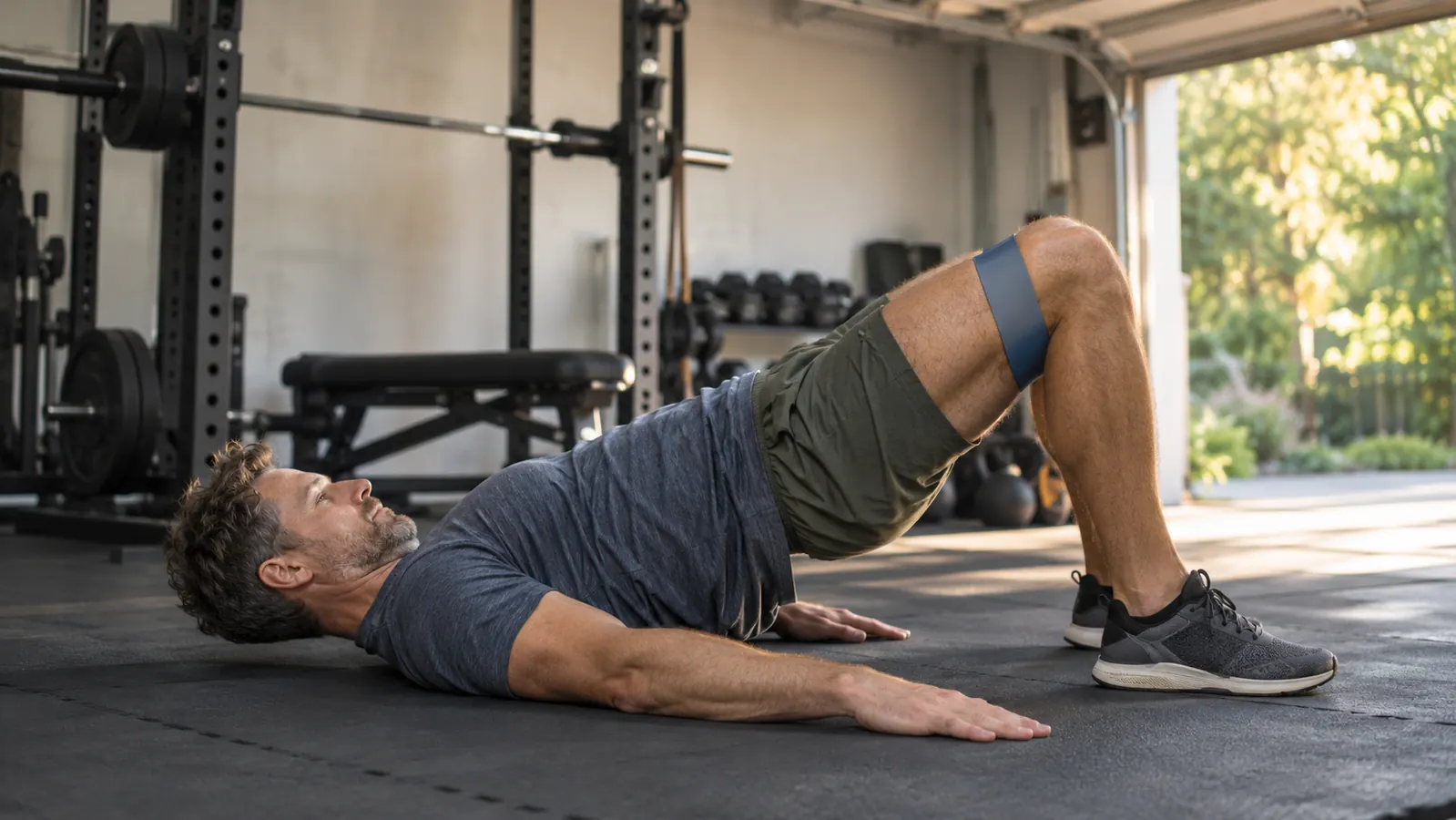
Two years ago I walked into a softball doubleheader with hips that felt like they had been packed with wet sand. I was 44 then, still pulling the gear on for the spring league, and the first five minutes of every game had turned into a slow negotiation with my own body. A teammate tossed me one of his loop bands and told me to spend ten minutes on my hips before I picked up a glove. That night I ordered the Fit Simplify loop bands, the set of five with the carry bag, mostly because the listing had a mountain of reviews and I was not in the mood to research anything harder. I figured I would snap one by midseason, throw the rest in a drawer and forget the whole thing.
Two years later the drawer is empty. The Fit Simplify set rides in my gym bag behind the seat of my truck, and it comes out before every game, every Tuesday night basketball run and most of my garage lifts. I have not snapped a single band. That is the short version. The longer version is that these are good bands with three real limitations the product page never mentions, and whether they earn a permanent spot in your bag depends on the job you are asking them to do.
The Quick Verdict
A dependable low-cost warmup tool for hips, glutes and shoulders that will not load a grown adult's legs and gives you no way to measure resistance.
Amazon Check Today's Price →The Only Piece of Gear That Has Survived Two Seasons in My Gym Bag
Five latex loop bands, a carry bag and an illustrated instruction booklet. They are the first thing I pull out before a game and the last thing I put away after a lift.
Amazon Check Today's Price on Amazon →What This Review Is and What It Is Not
I am not a trainer, a physical therapist or a doctor. I am an assistant athletic director at a public high school outside Fort Worth, I caught four years of college baseball, and I am 46 years old with knees and hips that remind me of it every morning. Everything below is what I noticed using one set of these bands for two years, in a garage, on a driveway and in a dugout. If you have a hip or a shoulder that has been hurting for weeks, put the band down and go see somebody who can actually look at it.
The First Thing Nobody Tells You: There Are No Numbers on the Band
The set gives you five resistance levels, and the listing says the two lightest are meant for the easier work, which is true as far as it goes. What it does not give you is a number. There is no poundage printed anywhere I have found, no reference point, nothing I can compare to the 35-pound dumbbells sitting ten feet away in my garage. After two years I can rank the five bands from lightest to heaviest by feel, and that is the entire extent of what I know about how much they pull. If you are the type who logs working sets and wants to progress in measurable steps, this set will bother you every time you pick it up.
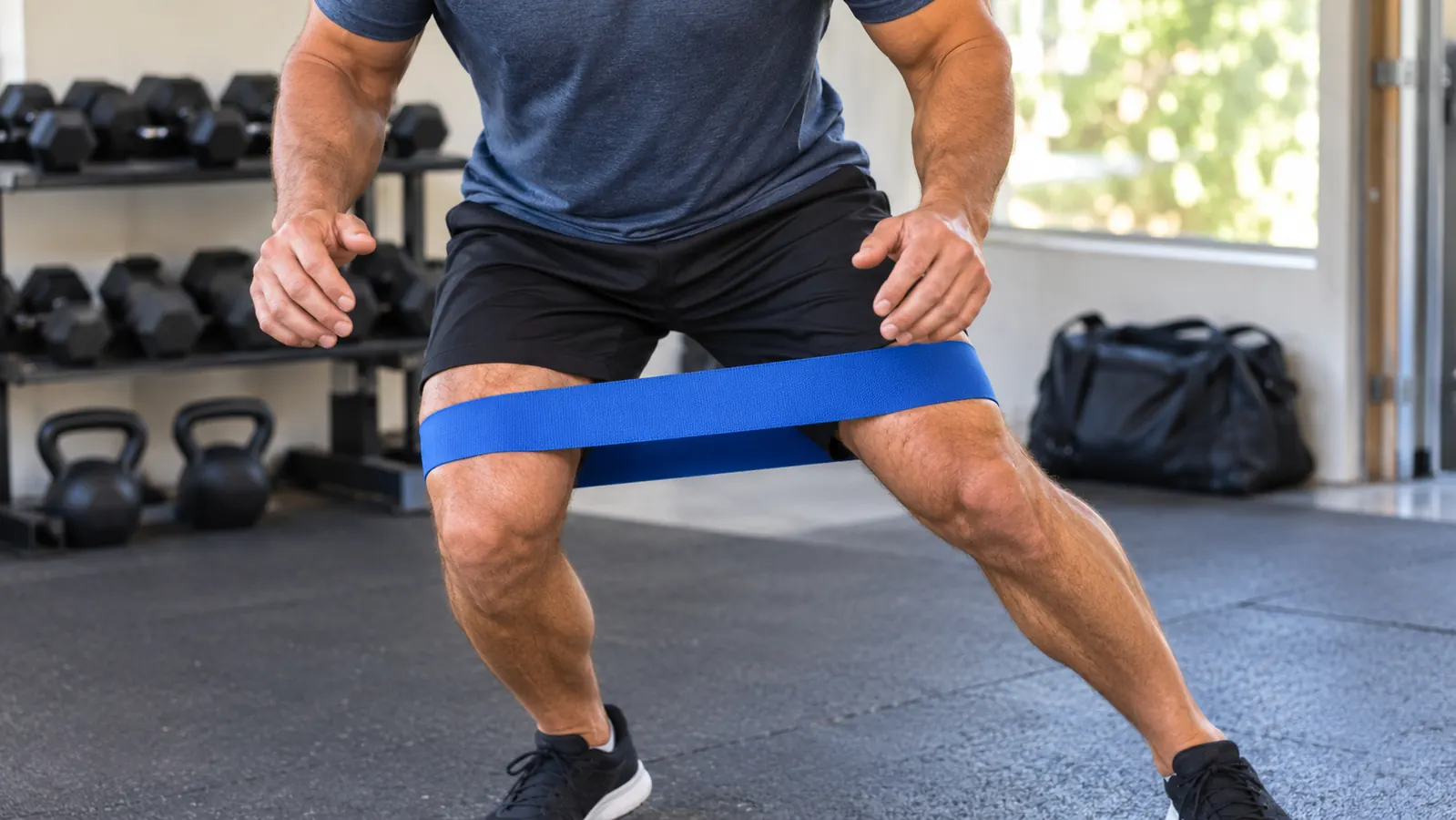
The resistance range is built for warmups and rehab, not for strength. The two lightest bands are genuinely light. For a 205-pound man with a catcher's knees, the light band is a shoulder band and nothing else. Before I squat, I use one of the middle bands for glute bridges and lateral walks, and it is enough to switch my hips on without tiring my legs. Take the heaviest band in the set and try to make it a leg workout and you will run out of resistance somewhere around the tenth rep. Doubling a band over itself to add tension is possible, but it turns a flat loop into a knot that will not sit still on your thigh.
A loop band is also not a cable machine. There is no anchor, no handle, no carabiner. Everything you do, you do by wrapping the band around your own legs, your own hands, or a piece of equipment you already own. For hip work, glute work and shoulder work that is fine, because those movements were built for a loop in the first place. For anything that wants a fixed point, you are improvising, and improvised is the right word for wrapping a band around the upright of a squat rack and hoping it stays put.
How I Actually Use Them, Week to Week
My week has a shape to it. Tuesday nights are men's league basketball. Most Saturday mornings are pickup if my knees agree, and softball runs in the spring and the fall. I lift in the garage two or three mornings a week, and I help coach my son Tanner's travel team when the schedule allows it. The bands come out before all of it. Ten minutes of hip and glute work before a game has done more for how the second half feels than anything I have ever done after the final whistle. That is the honest reason the Fit Simplify bands stayed in the bag, not brand loyalty.
The pregame routine is simple and it has not changed much in two years. Lateral band walks with a band just above the knees, twenty steps one direction and twenty back. Monster walks forward and backward across the grass behind the dugout. Clamshells on a bench when nobody is watching. Then a set or two of pull-aparts for the shoulders, because a catcher's shoulders after four years of college ball and thirty years of throwing are not what they were at 22. The whole sequence takes about eight minutes and I can do it in the grass or in a parking lot next to my truck. That portability is the whole point.
In the garage the bands do a different job. Pull-aparts between bench sets to keep my shoulders from tightening up. Face pulls with the band looped around the upright of my squat rack. Glute bridges and lateral walks before I squat. I have also used them on the driveway with Tanner's team, mostly for the younger kids who need something to do that is not another sprint, and the band walks keep them moving without beating them up before practice. A set of five bands and a bag is enough warmup material for a dozen middle schoolers if you are willing to rotate them through.
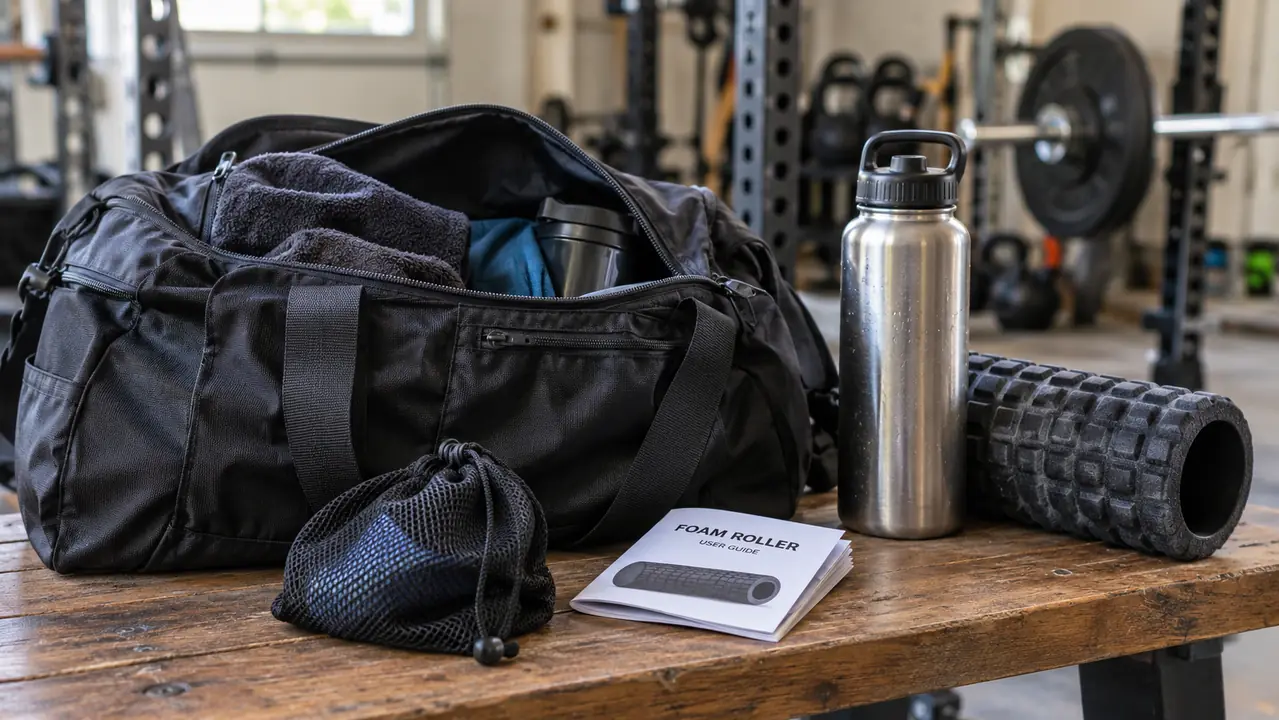
The carry bag that comes with the Fit Simplify set sounds like the kind of accessory that goes straight into a drawer. Mine has not. The whole set weighs about 3.5 ounces, so the bag lives in a side pocket of my gym bag and travels to every away game, every Saturday pickup run and every trip out to the garage. There is also an instruction booklet with illustrated exercises in the set. I used it heavily that first month, mostly to steal ideas, and I still flip through it when I want something different for my hips. It is not a training program, but it is a decent place to start.
How They Have Held Up
Two years, hundreds of uses, no snapped band. I have stepped on them, stretched them over the corner of a bench, left them in the bed of my truck overnight more than once, and used them on cold mornings in a garage with the door open. They are still intact and the latex still stretches the way it did in the first month. A couple of them have a scuff from the garage floor. That is the entire damage report.
I am not gentle with gear. If something is going to fail, it usually fails on me inside six months, and I will say so. The Fit Simplify set has not given me a reason to complain about durability. That is why I still hand them to coaches and parents. I do tell them to keep the set in the bag rather than on the dash of a truck, because latex and a Texas summer cab are not friends, and I would rather they get two years out of theirs than two months.
Two years, hundreds of warmups, zero snapped bands. The only thing I still cannot tell you is what any of the five actually pulls at.
Where They Fall Short
The bands roll. During lateral walks the band rides up your thigh, bunches behind your knee and forces you to stop and flatten it out. It happens every session. The band is a quarter inch thick, which is comfortable against the skin and lousy at staying put. A thicker band would sit better. That is a real tradeoff rather than a deal breaker, but if you are doing twenty minutes of band work a day you will notice it every single time.
There is no way to anchor them properly. I have wrapped a band around the upright of my squat rack for face pulls and it works well enough, but it slides down the post as I pull. Anything that needs a real fixed point, like a seated row or a band pulldown, is not happening with this set unless you own something sturdy to tie off to and have the patience to re-wrap it between sets.
The light bands are close to useless for legs. If you are a grown adult who lifts, you will use two of the five bands for hip and leg work and the other three for shoulders, arms and rehab. If you are brand new to training, the math flips and the light bands will be the ones you live on while the heavier ones sit in the bag. Nobody uses all five evenly. That is worth knowing before you buy a set of five, because it changes what you are actually getting.
My last complaint is a comparison problem. Five bands in a bag is not a gym. If you want to build strength in your hips and legs, this set will not do it. It warms you up, it keeps your shoulders moving between lifting days, and it gives you something useful to do in a hotel room or a dugout. It is not a substitute for a squat rack or a pair of dumbbells, and treating it like one is how people end up disappointed with a product that is actually doing its job.
What I Liked
- Five latex bands plus a carry bag in a package that weighs about 3.5 ounces
- No snapped bands after two years of steady use on grass, driveway and garage floor
- The illustrated instruction booklet gave me warmup ideas I still use
- Works well for hips, glutes and shoulders before games and lifts
- Easy to travel with, including in a truck or a gym bag
Where It Falls Short
- No resistance is printed in pounds, so tracking progress is guesswork
- The two lightest bands are too light for leg work on an adult who already lifts
- Bands roll and bunch during lateral walks
- No anchor point, so pulling exercises are improvised
- Will not replace weights for anyone chasing real strength
What the Instruction Booklet Is Actually Worth
The booklet in the set is better than I expected and worse than the internet makes it sound. It has dozens of illustrated exercises, and the drawings are clear enough to copy without guessing. What it does not have is any kind of structure. There is no eight-week plan, no guidance on which band to use for which movement, and no way to know if you are doing too little. It is an idea menu, not a program, and for somebody like me who already knows what a monster walk is, an idea menu is plenty.
If you have never used a band in your life, the booklet plus a search engine will get you where you need to go. If you want to be told exactly what to do for six weeks, this is not that product and no booklet in a bag of bands is going to be. I still pull it out when I want a new way to warm up my hips. That is a fair return on what is essentially a folded pamphlet in a bag.
Where They Fit Next to the Rest of My Gear
My recovery shelf by the door has three things on it that matter. The GRID foam roller has been there about three years. The Theragun Prime sits in the gym bag. The Fit Simplify bands live in the bag too. They do different jobs and I would not swap one for another. The roller is for the big surfaces, the hamstrings, the IT band area and the upper back, and it takes ten minutes on the garage mat. The massage gun is for the calves and quads after Tuesday basketball, a minute or two per muscle. The bands come first, before any of it, because warming up beats fixing things after the fact.
If I had to give up one of the three, the bands would be the last to go, and that surprises people. The roller and the gun feel like recovery. The bands feel like prevention. Ten minutes of hip work before a game is the reason I am not sore for three days afterward, and that was the original problem I was trying to solve. That said, they are also the simplest of the three and the easiest to replace, so my attachment to them is practical rather than sentimental.
Who This Is For
This set makes sense for three kinds of people. The first is anyone over 35 who still plays a sport and has figured out that the first ten minutes decide how the rest of the night feels. The second is a lifter who wants something small in the gym bag for shoulder and hip warmups, especially if you bench or throw and your shoulders complain. The third is a coach or a parent who wants a simple way to get a dozen kids moving before practice without hauling equipment. I keep mine for the first two reasons and I have handed them to Tanner's travel team for the third more than once.
Who Should Skip It
Skip them if you want to train strength with bands. A set of five loop bands this thin is not a loading tool, and if you are trying to build a squat or a deadlift with them you will run out of resistance fast. Skip them if you need a number to chase, because you will not get one. Skip them if you want handles and an anchor point, because this is not that product. And if something in your hip or your shoulder has been hurting for more than a couple of weeks, go see a doctor. A band is not a diagnosis, and I am not the man to give you one.
If You Want the Same Set That Survived Two Years in My Bag
Five latex loop bands, five resistance levels, a carry bag and an illustrated instruction booklet. Mine have been to every game, every pickup run and every garage lift since I bought them.
Amazon Check Today's Price on Amazon →