
Tuesday night basketball used to cost me two days. I would play an hour and a half at the rec center, drive home, and then spend Wednesday and Thursday standing up out of chairs like a man twice my age. Knees sore. Right hamstring tight as a guitar string. I told myself that was the bill for playing men's league at 46 with four years of college catching behind me.
Then last winter the bill got heavier. Every Saturday pickup game left me sore for two or three days. Not hurt. Just sore, in that dull everywhere way that makes you skip the next one. I started looking at compression boots the way I used to look at a new catcher's mitt, as a tool that might buy me two or three more seasons of doing the thing I love.
I bought the Hyperice Normatec 3 legs about five months ago. It is the biggest single purchase in my recovery gear by a wide margin. What follows is what five months of two or three sessions a week actually did for me, what it did not do, and the parts of owning it that nobody puts on the product page.
The Quick Verdict
It does one job and does it better than anything else on my shelf: it turns a rough Wednesday into a normal one. If you want a machine that also fixes your knees, keep looking, because this one will not.
Amazon Check Today's Price →The 30 Minutes on the Couch That Gave Me My Wednesdays Back
Plugs into the wall, fits a 32-inch inseam, seven levels of compression, and the remote means I never have to unfold my legs to change the pressure. That is the whole pitch.
Amazon Check Today's Price on Amazon →How I've Used It
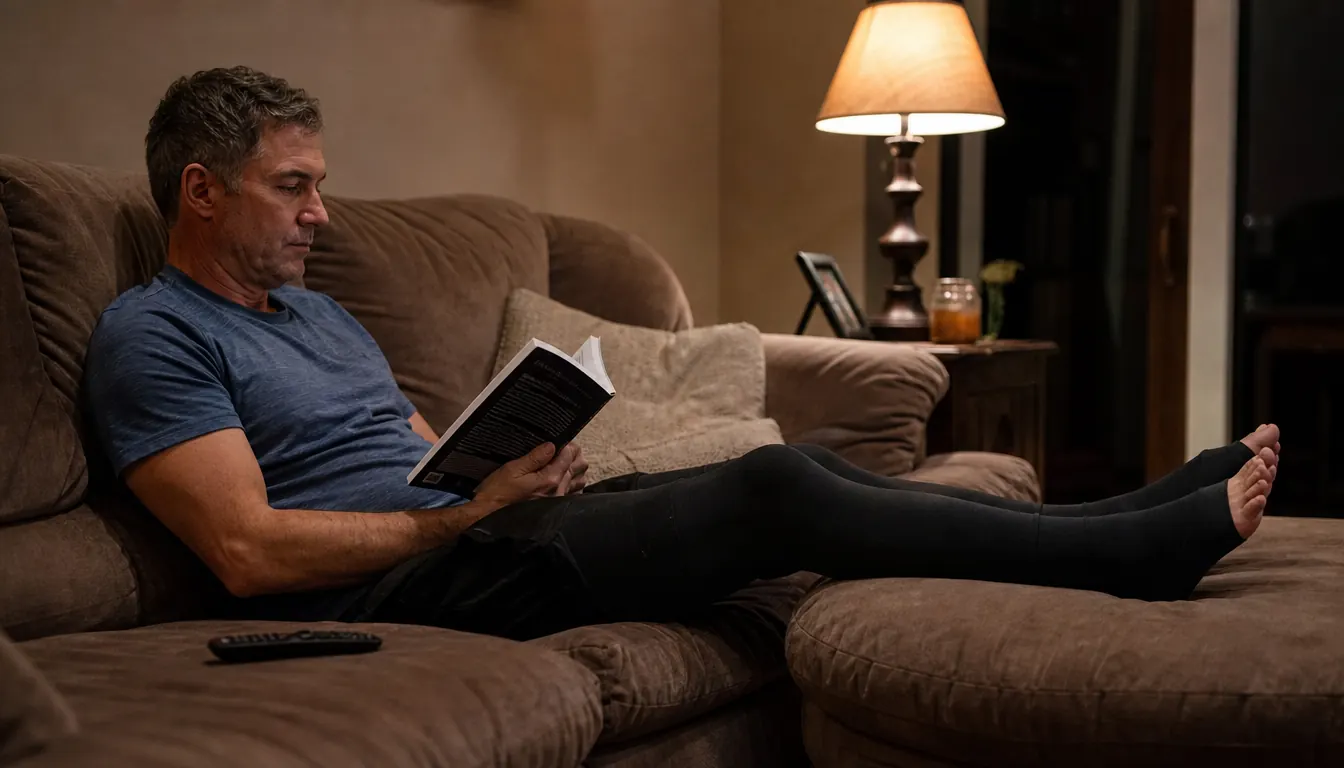
The routine is boring, which is the point. Sunday night, Tuesday night after basketball, and Saturday after a softball doubleheader if my legs feel heavy. Thirty minutes a session, sitting on the living room couch with my legs up on the ottoman and a game on. I run the levels up to where it feels like a firm hand squeezing and I stop there. I do not chase the top setting just to prove something.
Seven levels sounds like a lot until you use them. Level one is a light flutter that I would not pay for. Level seven is a serious squeeze that I use for about five minutes on a bad night and then back off. I spend most of my time in the middle four, and that is where the useful work happens for me.
ZoneBoost gets used more than anything else. It lets me give one zone extra time and attention, so my calves get an extended pass after a basketball night before the sleeves do their normal run through all five zones. My calves are the problem child. Always have been.
On a doubleheader Saturday I will run a full session that night and a shorter one Sunday morning before church if the hamstring is talking. That is not a prescription, it is just what fit into my week. The point is that the machine is easy enough to use on a night when you are tired, and the tired nights are the only ones that matter.
The first two weeks I was not sure. I would finish a session, think, well, my legs feel warm, and go to bed. It took about three weeks before I noticed the Wednesday difference. Worth knowing going in so you do not judge the thing on night two.
What the Normatec 3 Actually Does
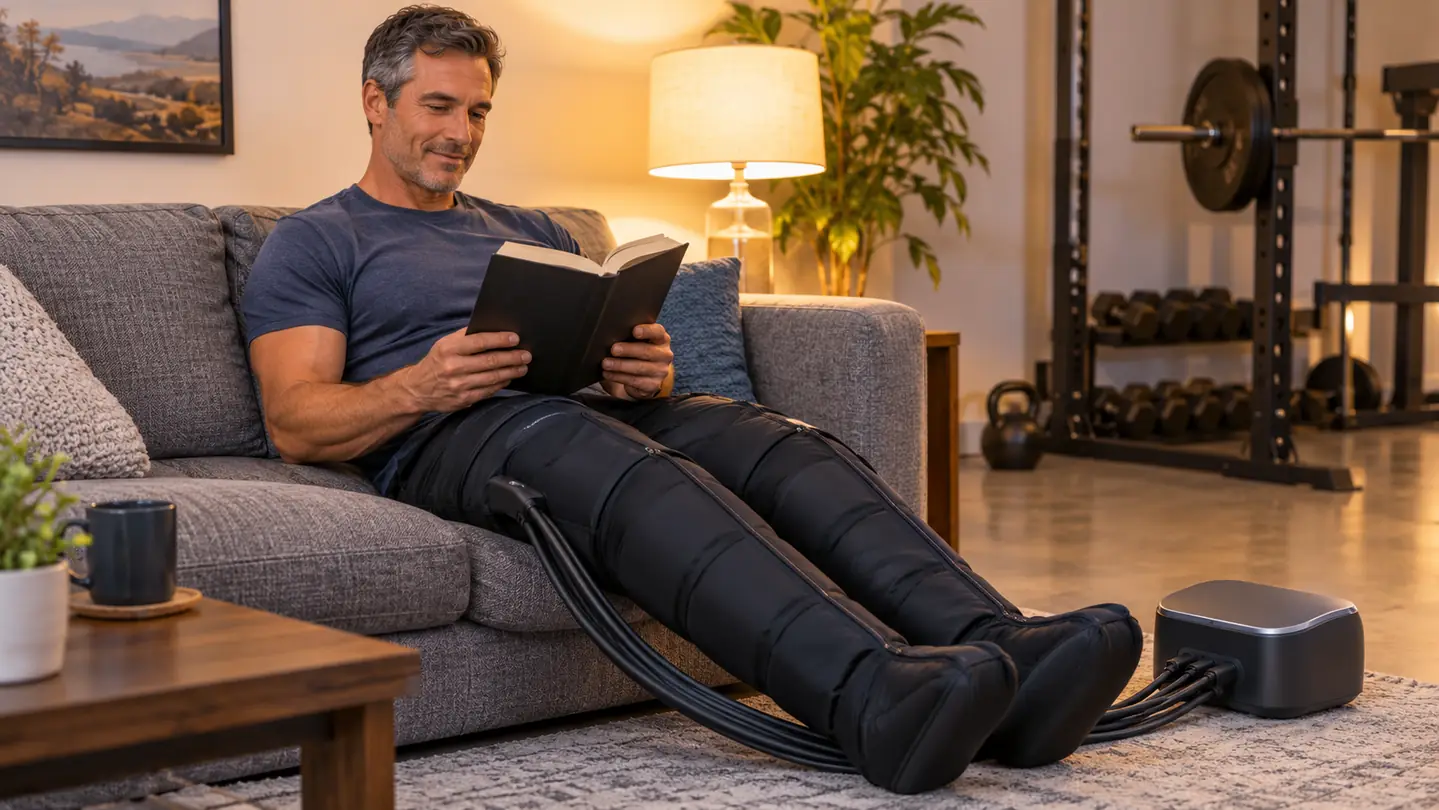
Strip away the marketing and here is the machine. The Hyperice Normatec 3 is a control unit that sits on the floor and pushes air through hoses into two full-leg sleeves. The sleeves have five overlapping zones running from the feet up through the calves, knees and thighs. The zones fill in sequence, so the pressure travels up the leg instead of clamping down on all of it at once. That traveling squeeze is the entire experience, and it is a good one.
There are 7 levels of compression, and the feel changes a lot across that range. Level two is a nudge. Level six is a real squeeze that I feel in the upper thigh. Having that range matters, because a boot with one setting is either too soft to do anything or too tight to sit through.
The control unit has an interface on the box and it also comes with a remote. The remote is the feature I did not expect to care about and now use every time. When both legs are inflated you are not getting up, and reaching down to the floor unit to bump the level is exactly the kind of small annoyance that makes a person stop using a thing.
It is corded electric. It plugs into the wall, so the session happens near an outlet. The listing puts the product dimensions at roughly 16.6 by 13.7 by 16.7 inches and the weight at 13.45 pounds, which in real life means it sits on the floor next to the couch and it does not ride to the gym in my bag. It is also not water resistant, so a steamy locker room or a pool deck is not where this belongs.
One thing to be clear about. This is compression, not massage. There is no roller, no heat, no vibration, nothing kneading at a knot. It squeezes and releases in a sequence. If what you want is pressure on one specific spot in your shoulder, this is the wrong tool and my Theragun is the right one.
What Five Months Actually Felt Like
The first honest change was not in my legs, it was in my Wednesday. I played Tuesday, ran a session that night, and woke up able to walk down the stairs at school without the sideways shuffle. That started happening in the first month and it has held ever since.
The second change was the hamstring. My right hamstring has tightened on me for years, usually the day after I squat or run. It still tightens. It just loosens faster. I used to spend three days babying it. Now I run a session, roll it out the next morning, and it is usually back to normal in a day.
Consistency is the whole thing. Five months at three nights a week is around sixty sessions. The weeks I skipped, I felt it. The weeks I kept up, the soreness was shorter and shallower. There was no single session that changed my mind, just the accumulation.
What it did not do is fix my knees. My knees are stiff from about a decade of squatting behind a plate, and thirty minutes of compression does not undo that. It makes them feel better for a few hours after a game. It does not make them younger. I want to be plain about that, because the photos of athletes lounging in these things do not say it.
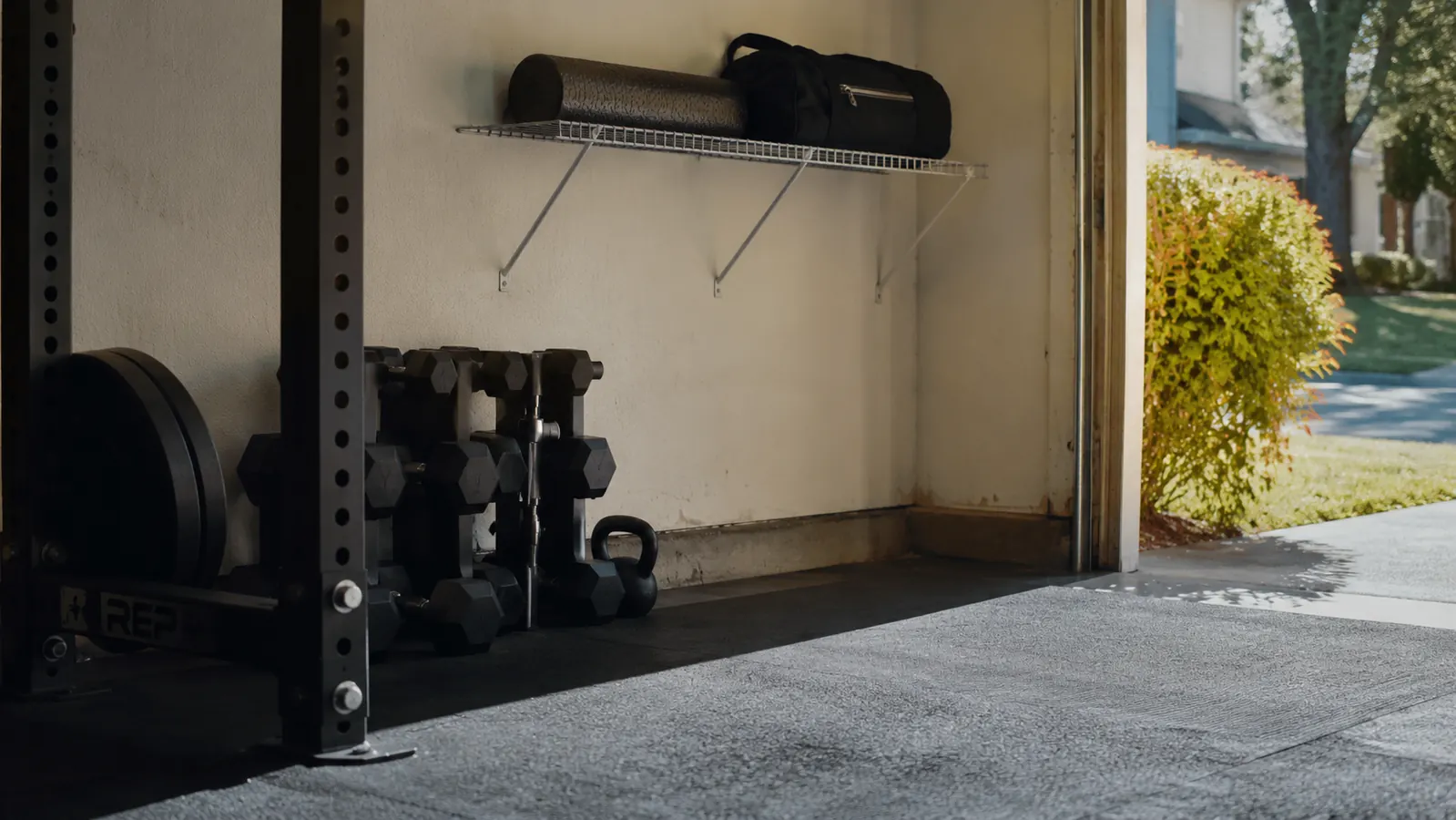
It also did not replace the unglamorous work. I still warm up with the loop bands before every game. I still roll on the foam roller most mornings on the garage mat. The boots are the last thing I do at night, not the whole program. The weeks I skipped the warmup and just used the boots, I still felt bad the next day.
The boots did not fix my knees. They moved Wednesday from survive it to normal, and that turned out to be the whole problem.
The Tradeoffs Nobody Mentions
It is corded, so you are anchored for the session. Thirty minutes on the couch sounds restful until you realize you have to plan a trip to the kitchen around it. I have learned to fill a glass of water before I plug in.
The sleeves are bulky and they do not fold down small. Mine live draped over the arm of a chair in the corner of the living room, and Dana has opinions about that which I have chosen not to fully hear.
It is not quiet, but it is not loud either. There is a compressor cycling and air moving through the hoses. It is quieter than the TV at normal volume. What it is not is silent, so if you were planning to use it in a room where somebody is sleeping, think again.
Storage is honestly the biggest annoyance with the Hyperice setup. The control unit is a box roughly the size of a small cooler and the sleeves are long. When I take it on a road trip to a tournament it fills most of the back seat of the truck.
And the price is real money. I thought about it for a month before I pulled the trigger, and I do not regret it, but I will not pretend it was an impulse buy either. My reasoning was simple. I use it three nights a week, and most things I buy for the garage get used twice and then live on a shelf. This one did not.
One fit caveat worth repeating. The standard sleeve is sized for a 31 to 35 inch inseam, and the listing gives a maximum thigh circumference of 30 inches. I am 6 feet, about 205 pounds, 32 inch inseam, and it wraps me from ankle to upper thigh with room. If your thighs tape anywhere near 30 inches, measure before you order, because this is not a stretchy one size fits most situation.
What I Compared It To Before Buying
Compression sleeves were the first alternative I looked at. A friend let me try his pair on a long road trip and they felt good for about an hour, and then they were just tight socks. They are cheaper and they travel in a gym bag. What they do not do is the sequential squeeze, and the sequential squeeze is the entire reason I wanted boots.
The foam roller was already in my garage and it cost almost nothing. I still use it. But rolling a hamstring at 5:45 in the morning is work, and sitting on the couch at 8:30 at night is not. In a busy week the boots get used more, and that is not a knock on the roller, it is just the truth about how I behave when I am tired.
A massage stick was never really in the running. I used a teammate's in the dugout once and it is fine for a calf between innings. It is not solving a two day soreness problem, and it is another thing my hands have to do at the end of a long day.
I also considered waiting a year to see whether something better came out. What changed my mind was that the soreness was already costing me games. Missing a Saturday pickup run because I was still beat up from Tuesday is a worse trade than spending the money once and getting on with it.
What I Liked
- Seven levels of compression, so you can find a pressure that is actually useful instead of just tight
- Five overlapping zones fill in sequence from the feet up, so it reads as a squeeze traveling up the leg rather than a clamp
- ZoneBoost lets me give my calves extra time without running a second full session
- The remote means I can change the level without unbending my legs
- Fits a 32-inch inseam with room, and the standard sleeve is built for a 31 to 35 inch inseam
Where It Falls Short
- Corded electric, so the session happens near an outlet and you are anchored for half an hour
- The sleeves are bulky and do not store small
- Not water resistant, so no locker room or pool deck
- Does nothing for knee stiffness, only the soreness around it
- The 30-inch maximum thigh circumference is a real ceiling, and bigger legs need to measure first
Who This Is For
Athletes in their 30s and 40s who still play on a schedule and pay for it for two days after. You do not need to be a pro. You need to be somebody whose Tuesday shows up on Wednesday.
It is for people who already do the boring things and want to add the recovery piece on top. If you warm up, you lift, you roll, and you still wake up wrecked, this is the next thing in line.
And it is for legs specifically. Feet, calves, knees, thighs. The sleeves cover that whole run in one pass, which is more than I can say for anything else on my shelf.
Who Should Skip It
If the problem is a joint, skip it and go see somebody. Compression will not fix a knee that has lost cartilage or a hip that catches on you. I say that without a joke attached. I have watched guys try to squeeze their way around a real problem and lose a season to it.
If you will not sit still for thirty minutes, skip it. The machine does nothing in a closet. Every guy I know who got rid of his boots used them twice and then resented them.
If your thighs are big, measure first. Thirty inches is the listed ceiling on the standard sleeve and it is not a suggestion.
And if money is tight, buy the foam roller and the loop bands first. Those two will get you a long way for very little, and I would tell a 25 year old to start there every single time.
If Your Tuesday Shows Up on Wednesday, This Is the Fix I Found
Five months, three nights a week, and I am still using it. That is the most honest thing I can tell you about a piece of recovery gear.
Amazon Check Today's Price on Amazon →