
Last winter I figured out I had a recovery problem, not a basketball problem. I play men's league on Tuesday nights, I help coach my son's travel baseball team, and I still get talked into Saturday morning pickup. After every one of those games my legs felt like they belonged to somebody else for two or three days. Not hurt. Just heavy and stupid. I would walk into the field house on Wednesday morning and one of the trainers would look at me and say, "You played last night." Not a question.
I tried the things you try. Stretching for ten minutes and calling it recovery. Ibuprofen. A hot shower. All of it helped for about an hour. What actually changed things was buying a pair of Hyperice Normatec 3 boots about five months ago and, more importantly, building a routine around them instead of treating them like a magic leg toaster. The boots are the center of it. They are not the whole thing. Here is the five-step version I run now, in the order I run it, and the parts I got wrong for a while.
The boots do the work at level 5 while you sit there doing nothing
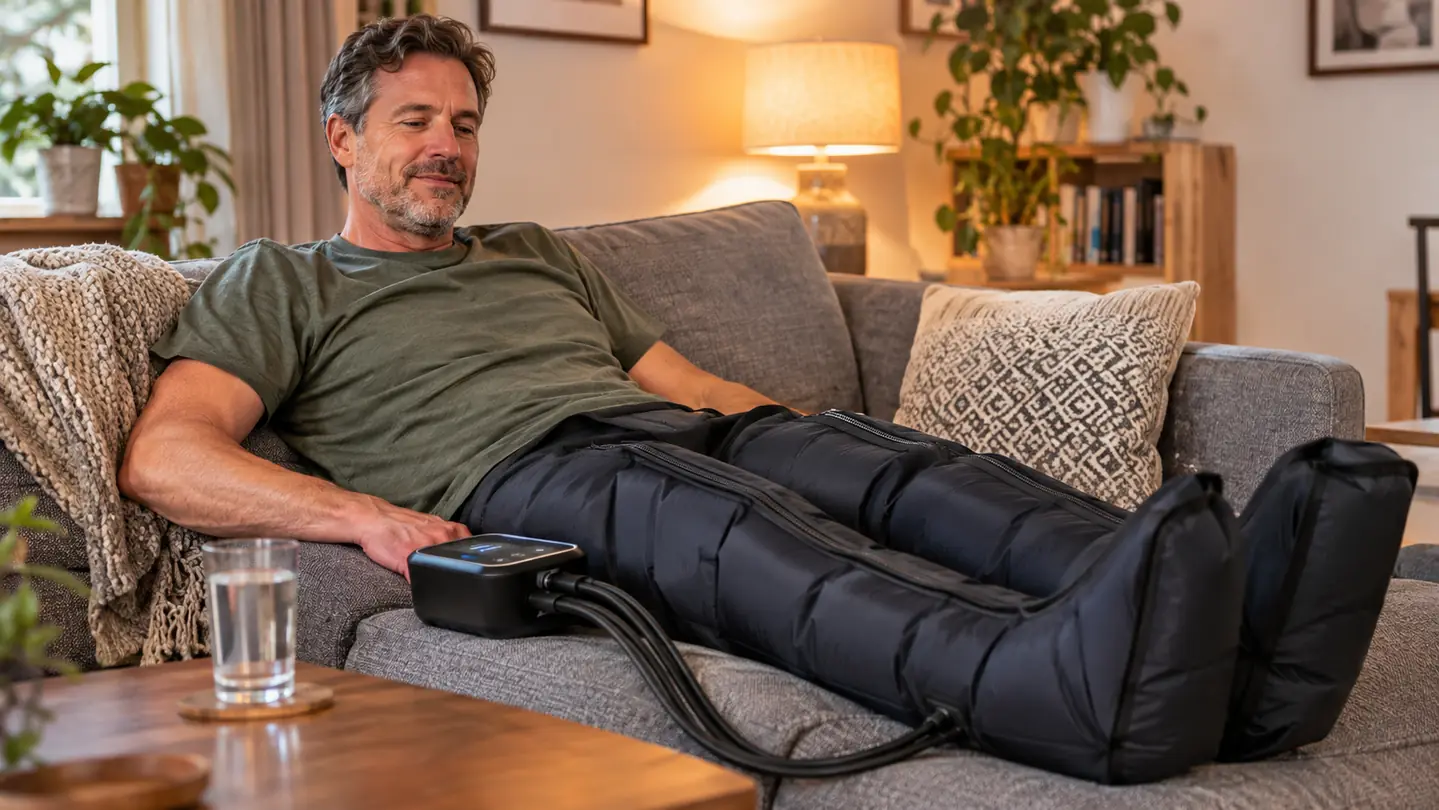
I run the Normatec 3 at the couch, 30 minutes, 2 or 3 nights a week. 7 compression levels and ZoneBoost, corded, standard size fits a 31 to 35 inch inseam, which covers my 32. If your Wednesday mornings look like mine did, this is the piece that moved the needle.
Amazon Check Today's Price on Amazon →The Night-After Routine, In Order
A couple of rules before the steps. This is what works for a 46-year-old with stiff knees and a right hamstring that tightens if I look at it wrong. It is not medical advice, and if something is sharp, swollen, or getting worse instead of better, that is a doctor conversation, not a blog post. Everything here is about ordinary post-game heaviness.
The other rule: order matters more than gear. I wasted a couple of months using the boots first and rolling afterward and wondering why my hamstrings still felt like guitar strings.
Step 1: Cool down and get fluids in before you sit down
The ten minutes right after the final whistle are the cheapest recovery you will ever get and the easiest to skip. I walk. Not a workout walk, just laps around the court or the outfield with my hands on my hips while the guys argue about the game. Then water, and something with salt in it if it was hot.
What I stopped doing was sitting on a bleacher bench for twenty minutes talking to parents, then driving home and sitting on the couch. By the time I got up, my calves had set like concrete. Moving for ten minutes before the sitting starts changes how the rest of the night feels.
This costs nothing. It also has nothing to do with compression boots, which is why I put it first. Nobody buys their way out of a bad cooldown.
Step 2: Roll the hamstrings and the IT band area before the boots, not after
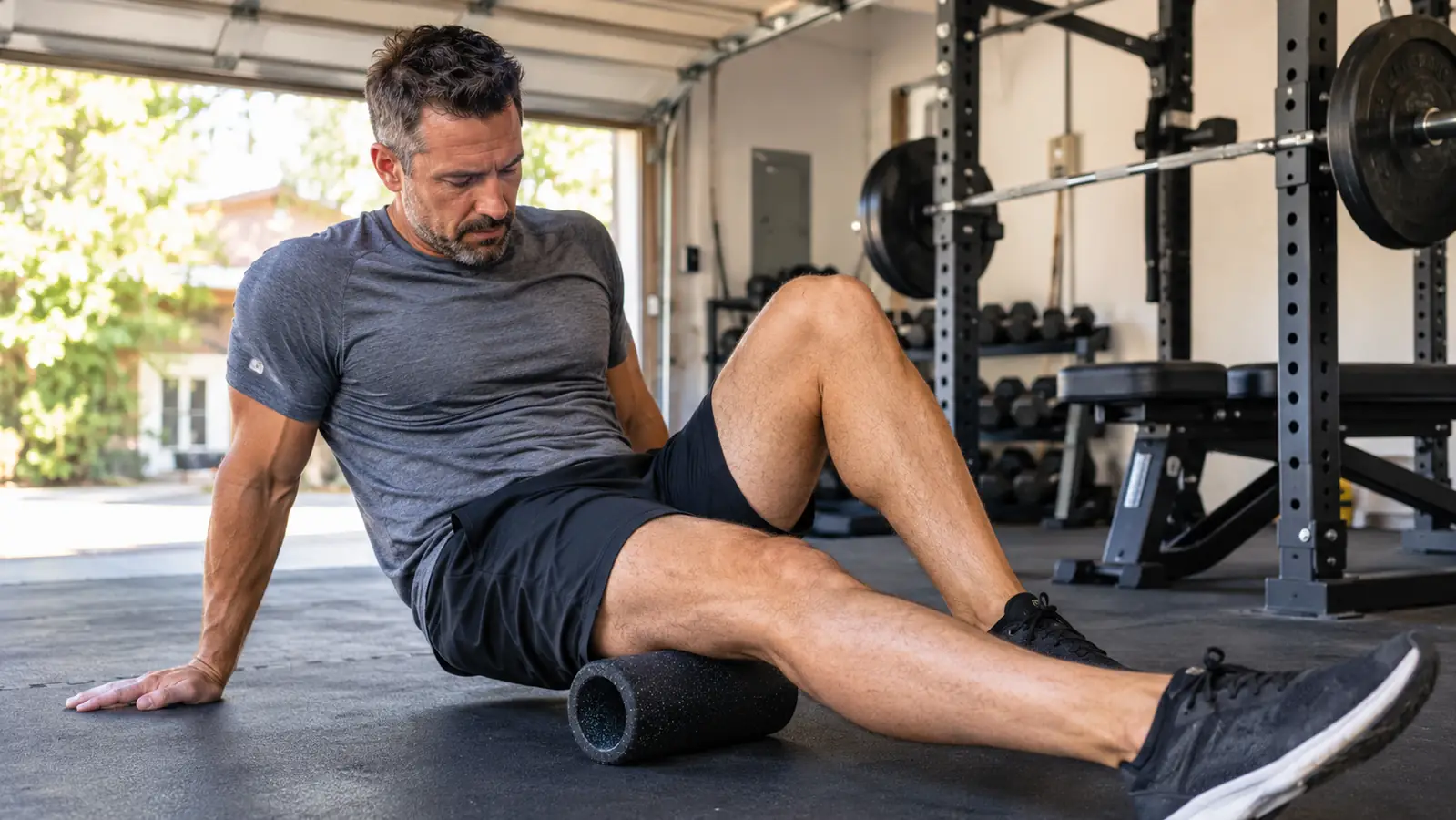
I have a TriggerPoint GRID roller I have owned for about three years. It lives on the garage mat, and after a game I bring it inside because the garage is cold and I am not 25 anymore. On the night after a game I roll each hamstring for about a minute, slow, and then the outside of each thigh for another 45 seconds or so.
The point is not to grind out knots. It is to spend a couple of minutes on the tissue that the boots are about to squeeze. When I roll first, the boots feel like they are working with something. When I skip it, they feel like they are pushing against a brick.
One honest note on this: rolling first is a feel thing, not a proven science thing. All I can tell you is that on the nights I do it, my legs are less cranky at bedtime. That is the standard I use for everything in this routine.
Step 3: Thirty minutes in the Normatec 3 at a level that is not a torture test
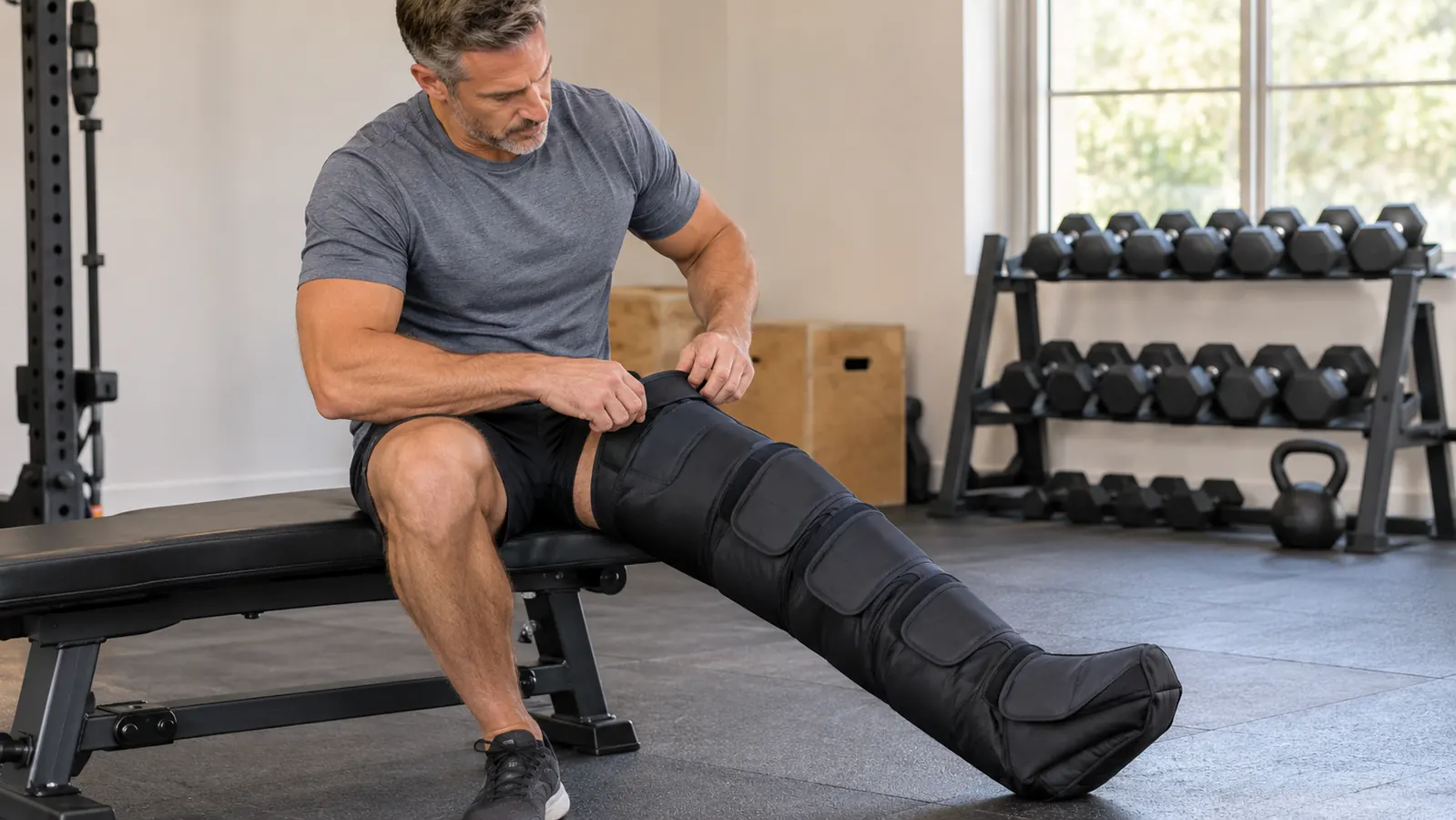
Here is the part people ask me about. The Hyperice Normatec 3 is a set of full-leg sleeves that inflate in sections from the feet up, squeezing air down one zone and then the next, then releasing. It has 7 levels of compression, it plugs into the wall, and it has a handheld remote. That is the whole machine. There is no app on it, no Bluetooth, nothing to pair. You sit down, you pick a level, you start it.
The standard size fits a 31 to 35 inch inseam and up to a 30 inch thigh circumference. My inseam is 32, so I am near the short end of it, and the boots still come up high enough to cover the quad. If you are taller than 35 inches of inseam, you need the large, and I would not try to squeeze into the standard because it feels like a deal. A bad fit on a compression boot is worse than no compression boot.
The mistake I made for the first three weeks was cranking it to level 7 because more has to be better. I would finish and feel like my legs had been in a vice, and not in a good way. Now I run level 5 for 30 minutes, and I use ZoneBoost on the last stretch if my calves are the worst of it. ZoneBoost is the one control I actually touch mid-session. Level 5 is enough that I feel it work and not so much that I am watching the clock.
I do this 2 or 3 evenings a week, not every night. Tuesday after basketball, Saturday after a doubleheader, and maybe one more if the week was heavy. Thirty minutes is about one episode of something, and the boots live by the door to the house so I do not have to go dig them out of a closet and talk myself into it.
Step 4: Get the hips and glutes moving before bed, even for five minutes
This was the piece I was missing for years. My legs would feel better and then my lower back would be wrecked, and I finally connected the two. Tight hips pull on everything. I have a cheap set of five loop bands I bought about two years ago after my hips felt locked up during softball warmups, and I use them for five minutes before bed on a game night.
Band around the thighs, sidestep down the hallway and back. Band around the ankles, a few walking steps each way. Then a set of glute bridges on the bedroom floor. That is it. Five minutes.
I am not going to pretend this is a program. It is the minimum amount of hip work that keeps me from waking up stiff, and it takes less time than brushing my teeth and arguing with a 14-year-old about the thermostat.
Step 5: Sleep, and stop treating the boots as a substitute for it
I went through a stretch where I would do the whole routine, get in bed at 11:30, sleep six hours, and be confused about why I still felt bad. Compression boots do not fix a sleep debt. They are thirty minutes of help at the end of the night. Sleep is the eight hours where the actual repair happens.
On a game night I now aim to be under the covers by 10:30, which means the boots are on by 9:45 at the latest. That one change did more for my Wednesday mornings than anything I bought. I still keep the Hyperice boots in the rotation because they make the 30 minutes before bed feel productive instead of just waiting to be tired, but I stopped asking them to do a job that belongs to sleep.
I ran the boots at level 7 for three weeks because more had to be better. Level 5 for 30 minutes does more for me than level 7 ever did.
What Else Helps
A few smaller things that earned their place in the routine, none of them expensive.
Elevating the legs for ten minutes while you are already on the couch costs nothing and takes no discipline. So does drinking more water than feels necessary on a game night. I also keep a lacrosse ball in my gym bag for the bottom of my feet, which get beat up from a basketball court, and two minutes per foot before bed does a surprising amount of work.
The one I would tell you to be careful with is the instinct to add more. More rolling, higher compression, longer sessions. I spent my first couple of months treating recovery like training, where volume is virtue. It is not. Thirty minutes, 2 or 3 nights a week, plus sleep, plus five minutes of hip work, does more than ninety minutes of fiddling with gear.
What I'd Skip
I wasted real money and time on a couple of things, so here they are. Compression sleeves, the kind you pull on and wear around, never made sense for me. I tried a friend's pair once on a road trip and they felt like tight socks. That is a different tool for a different job, and if you want the full breakdown I wrote about it separately, but for the night-after-a-game job the boots do the work and the sleeves do not.
I would also skip the ice bath guilt. If you love a cold plunge, have at it. For me, the fifteen minutes of dread and the shivering afterward were not worth what I got, and I stopped pretending otherwise. And I would skip any routine that requires you to drive somewhere. The recovery that actually happens is the recovery that is easy to do at home with the TV on.
Who This Is For
This routine is for the person who is still playing something at 35, 45, or 55 and finding that the body has started sending invoices. If your games are over and you are sore for two days instead of two hours, and nothing is actually injured, this is the shape of what helped me.
It is also for the parent who is now helping coach and finds themselves throwing batting practice for an hour before their own game. That was the part I did not see coming. My legs get more total work now at 46 than they did at 26, and none of it is organized.
If you are a high-level athlete with a real training staff, you already have better versions of all of this and you do not need my night routine. If you are brand new to exercising and everything hurts all the time, the answer is probably less volume and a conversation with a doctor, not a pair of boots.
Who Should Skip It
Skip it if the problem is an injury. The Hyperice Normatec 3 is a recovery tool, not a treatment. If you have a strain, a tear, swelling that will not go down, or pain that wakes you up, go get it looked at. I say that as a guy who has coached long enough to watch people turn a two-week problem into a two-month one because they did not want to miss a game.
Skip it if you will not use it. Five months in, mine gets used 2 or 3 nights a week because it lives next to the couch and takes one button. If yours ends up in the garage inside a bag, it was a 13 or so pound piece of furniture. Be honest with yourself about whether you will actually sit for 30 minutes.
And skip it if you are looking for one purchase that replaces the boring stuff. The cooldown, the five minutes of hip work, the early bedtime. Those did more than the boots did, and they are free. The boots make the free stuff easier to stick with. That is the honest sales pitch, and it is the only one I have.
Thirty minutes on the couch beats two sore days on your feet
Standard size fits a 31 to 35 inch inseam, 7 compression levels, corded, remote in hand, no app to fight with. I run mine at level 5, 2 or 3 nights a week, and my Wednesday mornings stopped being a joke around the field house.
Amazon Check Today's Price on Amazon →