
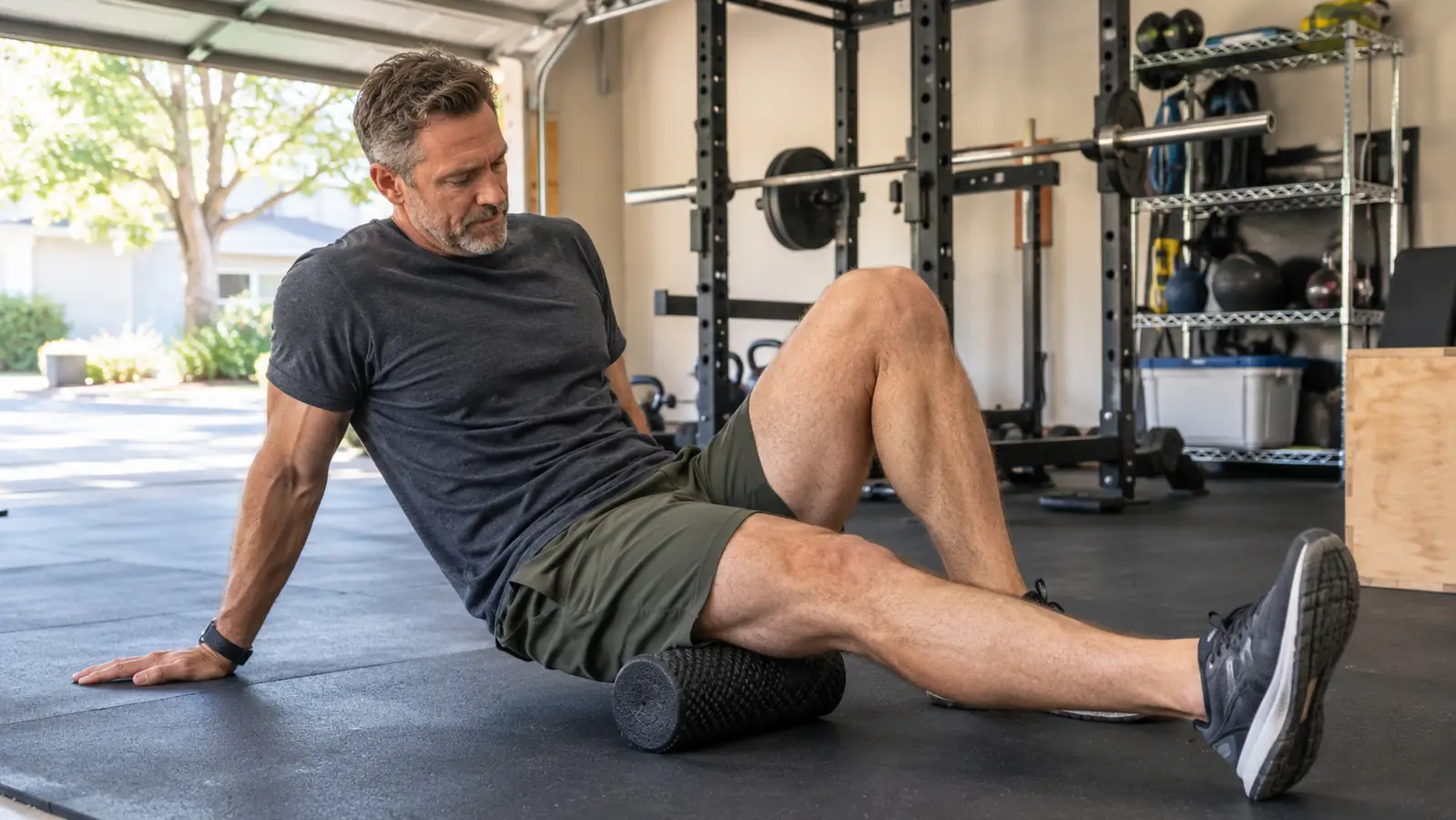
I'm Grady Holcomb, 46, an assistant athletic director at a public high school outside Fort Worth, Texas. I caught four years of college baseball, and my knees and hips have been stiff ever since. My right hamstring tightens up if I look at it wrong. The TRIGGERPOINT GRID foam roller has been on my garage mat for about three years, and it is the only piece of recovery gear I use most mornings. I bought the 13-inch original density version myself after a physical therapist friend showed me how to roll. This is the honest review I wish I had read before I bought it, including the parts that are not fun and the people who should skip it.
Here is the short version. The GRID is a firm, 13-inch foam roller with a hollow core and a multi-density exterior. It is 5.5 inches in diameter, weighs about 1.4 pounds, and carries a 500 pound weight limit. It has a 1 year limited manufacturer warranty and comes with access to a free online instructional video library. You get one roller. It is not a massage gun, it is not compression boots, and it will not fix a torn muscle. If it is a real injury, see a doctor. What it will do is give you a sturdy, portable tool for the boring daily work that keeps a 46-year-old weekend athlete from waking up sore for three days after Tuesday basketball.
The Quick Verdict
A firm, well-built 13-inch roller that rewards daily use, but the extra firm density and short length are not for everyone.
Amazon Check Today's Price →The roller I reach for before Tuesday basketball
If you want the same 13-inch original density TRIGGERPOINT GRID, the current Amazon listing is the place to check size, warranty and availability.
Amazon Check Today's Price on Amazon →What Nobody Tells You Before You Buy
Nobody tells you that foam rolling is boring. There is no screen, no vibration, no app, no coach telling you that you are doing it right. The TRIGGERPOINT GRID does one job: it puts a firm surface under a muscle so you can apply pressure with your own body weight. If you want entertainment while you recover, this is not that. If you want a tool that is ready on the mat every morning, this is that.
Nobody tells you that firm means firm. The listing calls the original GRID extra firm, and that is accurate. My first week with it, I pressed too hard on my right hamstring and felt like I had talked myself into a bruise. The fix was not a softer roller. The fix was slowing down, using less body weight, and spending more time on the muscle instead of trying to win a contest. If you are new to rolling, start with light pressure and short passes.
Nobody tells you that a 13-inch roller is a compromise. It is long enough for hamstrings, quads, the IT band area and upper back. It is short enough to fit in a gym bag and to store on a wire shelf in my garage. But it is not a long roller for sweeping full-body strokes, and it is not a half roller for balancing work. The 13-inch length is the reason I can keep it out and use it, which matters more than a longer roller I would leave in a closet.
How I've Used It
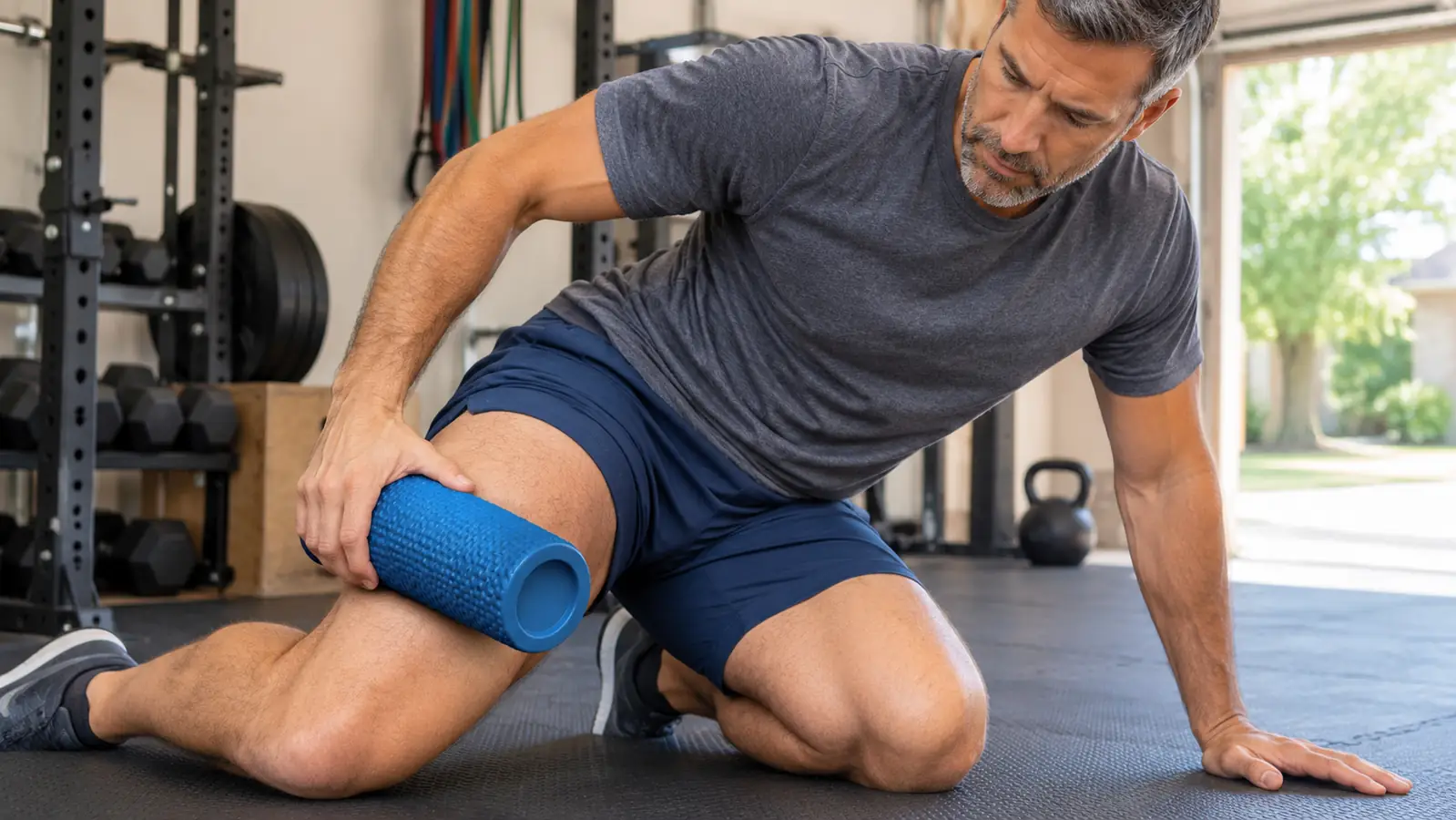
I keep the GRID on the rubber mat in my two-car garage, next to a squat rack, a bench and one pair of 35-pound dumbbells I have owned for about ten years. Most mornings I spend five to ten minutes on it before I lift or before I drive to school. I roll my hamstrings, the outside of my thighs, and my upper back. On Tuesday nights I play men's league basketball, and on some Saturday mornings I play pickup. In the spring and fall I play softball. I also help coach my son Tanner's travel baseball team, so I am on my feet at practices. The roller is part of the warmup, not the workout.
The routine is simple. I sit on the mat, put the roller under one hamstring, and move slowly from just above the knee to just below the hip. I stop on the spots that feel tight and breathe for a few seconds. Then I switch legs. For my upper back, I lie on the roller with it across my shoulder blades, keep my hips on the floor, and move small distances. I do not roll my lower back. I do not roll a joint. I do not roll anything that feels sharp or swollen. I am 6 feet tall, about 205 pounds, with a 32-inch inseam. The 13-inch roller fits under my hamstring without feeling cramped, which is part of why I still use it.
The first month, I used it every day because it was new and I was annoyed at how sore I got after basketball. Three years later, I still use it most mornings, but not because I am disciplined. I use it because the difference is obvious when I skip a week. My right hamstring feels shorter, my hips feel locked, and the first five minutes of basketball feel like work instead of warmup. That is not a medical claim. It is what I notice in my own body. I am not a doctor or a physical therapist, and I am not going to pretend a foam roller is treatment.
The Parts That Actually Matter
The multi-density exterior is the part I did not understand until I used it. The surface is not one soft block of foam. It has zones, and the firmness changes depending on where you are on the roller. That matters when you are working a hamstring versus an upper back. I do not have to switch tools. I move a few inches and the pressure changes. I am not an engineer, and I cannot tell you why the design works, but I can tell you that it feels different from the cheap smooth roller a friend lent me once.
The hollow core is the other thing. It keeps the roller light, about 1.4 pounds, so I can move it from the mat to the shelf with one hand. It also means the roller has some give under load, but not so much that it collapses. The listing gives a 500 pound weight limit, and I am 205 pounds. I have never felt it bottom out. I have also never used it with two feet on top like a balance trainer, because that is not what it is for.
The size is right for my garage. The 13-inch length and 5.5-inch diameter fit between my shoulder blades and under my hamstring without feeling like a pool toy. It is small enough that I can brace it against the mat and not fight it. The exterior has held up. I have used it most mornings for about three years, and it has not broken down or lost its shape. I cannot say the same for the cheap roller I borrowed. That one went soft in the middle and started to feel like a marshmallow.
The free online video library is a nice extra. I watched a few clips early on, mostly to check my positioning. It is not a personal training session, and it does not replace a real assessment. But if you have never rolled before, it is better than guessing from a picture. The 1 year limited manufacturer warranty is also standard for this kind of gear. I have not had to use it.
What I Liked
- Firm, multi-density surface gives you different pressure without switching tools
- Hollow core keeps it light enough to move and store easily
- 13-inch size fits hamstrings, quads, the IT band area and upper back
- Held its shape through about three years of most-morning use
- 500 pound weight limit and 1 year limited warranty
- Free online instructional videos help with positioning
Where It Falls Short
- Extra firm density can be too much at first
- 13-inch length is a compromise for full-body sweeping
- No app, vibration, screen or coaching, it is just a roller
- It will not fix a real injury or replace strength work
- Online videos are not hands-on instruction
Three years in, the 13-inch TRIGGERPOINT GRID has not broken down or lost its shape, and it is still the first thing I reach for on the garage mat most mornings.
Where It Falls Short
The biggest shortfall is the density. Extra firm is not a marketing word here. If you have never rolled, or if your muscles are sensitive, this roller can feel like a pipe. I would not hand it to a beginner and say good luck. I would tell them to use light pressure, keep their body weight off it, and start with 30 seconds per area. If that is still too much, a softer roller is the right first step, not this one.
The second shortfall is the length. The 13-inch size is why I use it, but it is not the best tool for everything. If you want to roll your whole back in long strokes, a longer roller is easier. If you want to work a small spot near the hip, the 13-inch roller can feel like a lot of roller for a small job. I have learned to use the end of the roller and to change my angle, but a shorter or longer tool would be better for some positions.
The third shortfall is expectations. A foam roller is not a massage gun and it is not compression boots. It does not pulse, it does not heat, and it does not tell you when to stop. It is a firm surface and your own body weight. If you are looking for a device that does the work for you, this is not it. If you are willing to spend five to ten minutes on the mat most mornings, it is a very good tool for the job.
One more thing. The GRID is not a substitute for strength work. My knees and hips feel better when I roll, but they also feel better when I squat, do hip work with the Fit Simplify bands, and keep my hamstrings strong. The roller is one part of the routine. If you use it and ignore the rest, you will be disappointed. That is not the roller's fault, but nobody tells you that before you buy.
Who This Is For
This is for the weekend athlete who already knows they need to do something and wants a simple tool that is ready to go. It is for the person who will leave a roller on the floor or on a shelf and use it most mornings because it is there. It is for hamstrings, quads, the IT band area and upper back. It is for someone who likes firm pressure and does not need an app or a screen. If you are 6 feet tall, about 205 pounds, and your knees and hips are stiff from old sports, this is the size and density I would start with, as long as you are honest about starting slow.
Who Should Skip It
Skip it if you are brand new to rolling and you know you will press too hard. Skip it if you want a soft roller for gentle work. Skip it if you need a long roller for full-body strokes or a half roller for balance work. Skip it if you have a real injury, sharp pain, swelling or numbness. Go see a doctor or a physical therapist. Skip it if you want a device that does the work for you. And skip it if you will not use it. A roller that stays in the closet is just a foam cylinder taking up space.
How It Fits With the Rest of My Recovery Gear
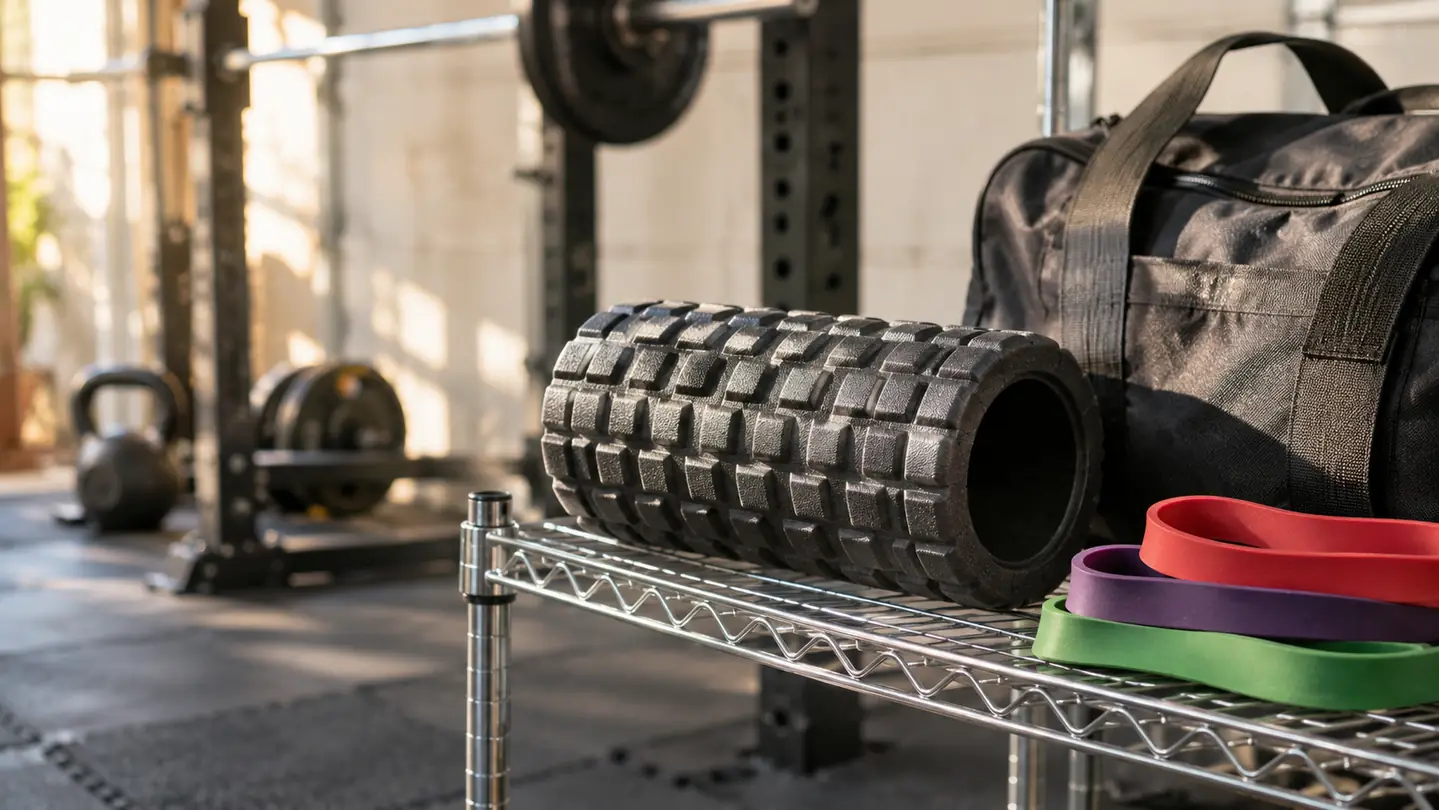
My recovery gear lives on a wire shelf by the door to the house. The TRIGGERPOINT GRID is on the top shelf because I use it most. The Theragun Prime (6th Gen) is in my gym bag. I bought it about 10 months ago after a bad stretch of sore calves and quads following Tuesday basketball. It has 5 speeds and 2 attachments, and I use it for 1 to 2 minutes per muscle on calves, quads and shoulders. The GRID and the Theragun do different jobs. The GRID is for slow pressure and for finding tight spots. The Theragun is for a quick pass before I leave the gym. I would not want to give up either one, but if I had to keep one, it would be the GRID because I use it more often.
The Normatec 3 legs are the big purchase. I bought them about 5 months ago, and I use them 2 or 3 evenings a week for 30 minutes on the living room couch after basketball nights and doubleheader softball Saturdays. They have 7 compression levels and ZoneBoost, and they plug into the wall at the couch. They are great, but they are not something I can throw in a gym bag. The GRID is the opposite. It is small, it is light, and it is always ready. The Fit Simplify bands are for warmup, not recovery. The GHB Pro Agility Ladder is for footwork on the driveway. None of them replace the roller. The roller does not replace them.
If you are building a recovery shelf from scratch, I would start with the GRID. Then add bands for warmup. Then, if you play hard twice a week and want to spend on recovery, consider compression boots. A massage gun is useful, but it is not the first thing I would buy. That is my order after three years of figuring it out in a garage.
If your hamstrings are still angry after every game, start here
The 13-inch original density TRIGGERPOINT GRID is the tool I would buy again. Check the current Amazon listing for the 500 pound weight limit, the 1 year warranty and the free video library, then decide if extra firm is right for you.
Amazon Check Today's Price on Amazon →